Dallara & Michelin
PARTNERS
Italian race specialist Dallara and tyre partner Michelin were deeply involved — the record would not have been possible without them.

THE ULTIMATE GRAND TOURISME · 440 KM/H
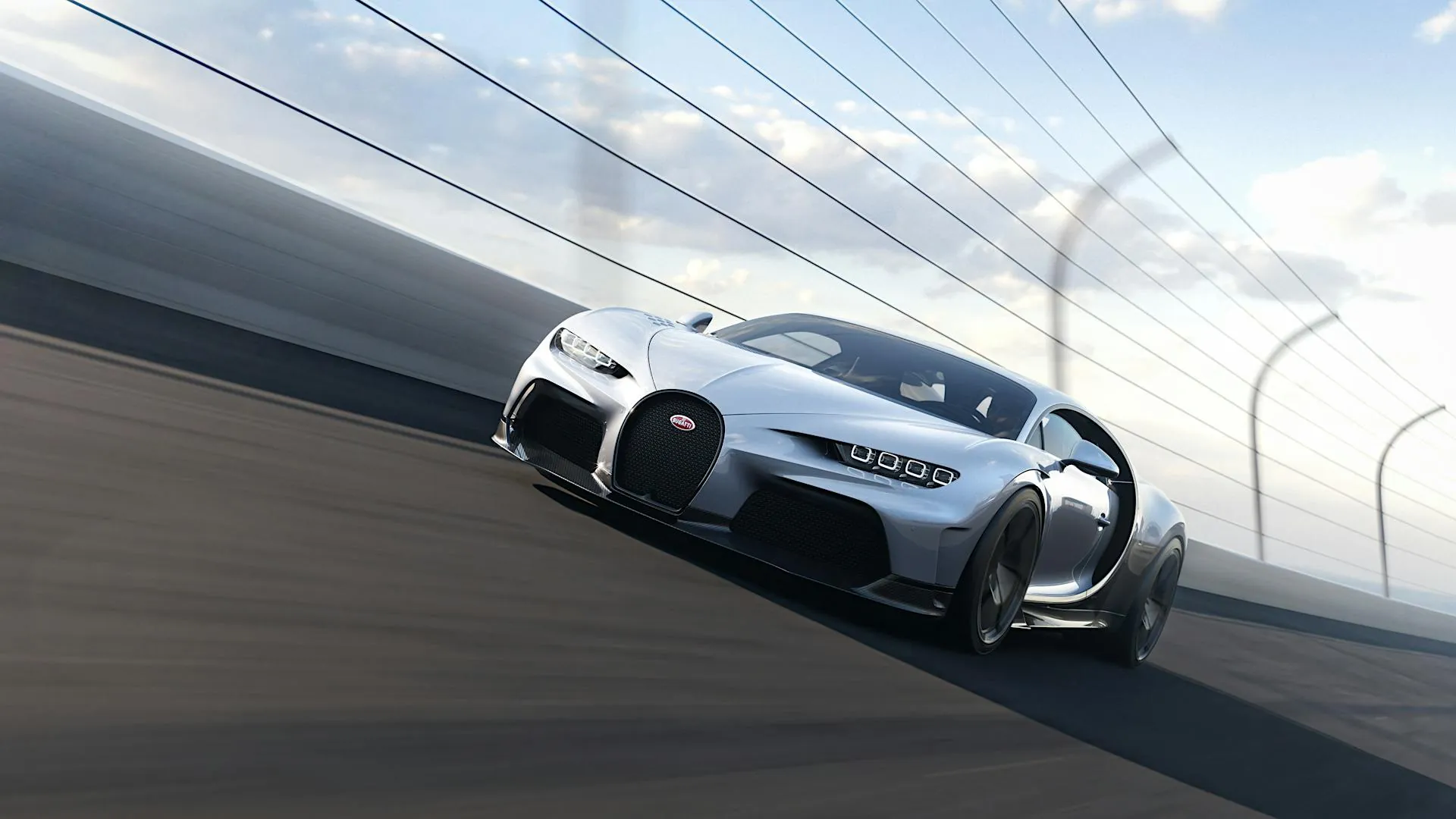
Extended by 25 cm — the tear-off area cut by around 40%.
An 8.0-litre W16 with four turbochargers. 0–400 km/h in 28.6 seconds — the speed at which planes fly.
The world's fastest production car — and its most luxurious traveller.
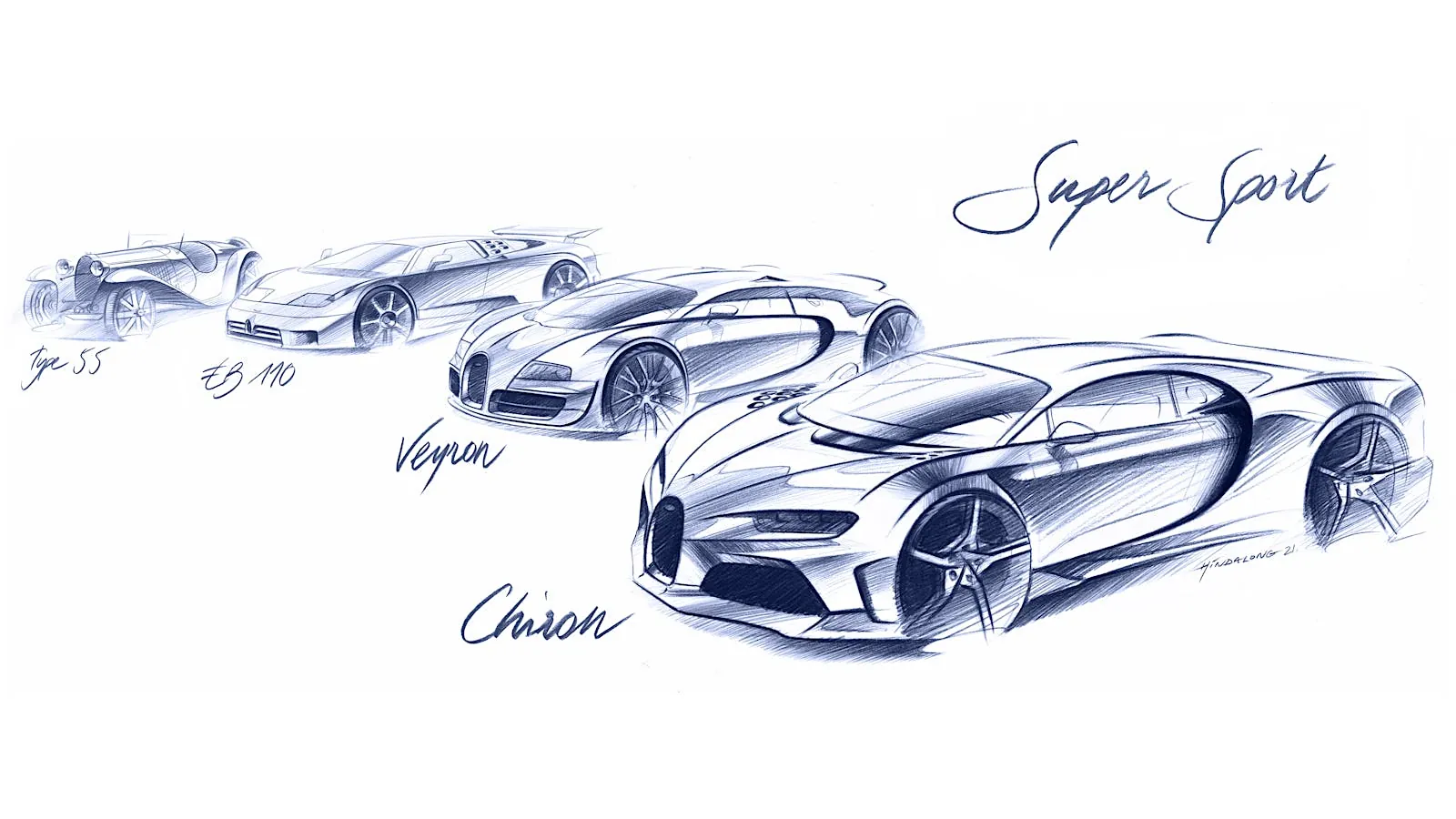
The Chiron Super Sport is the "longitudinal" end of Bugatti's spectrum of performance —
the counterpart to the corner-hungry Pur Sport.
Born within the Chiron family's 500-unit programme, it has a personality of its own:
top speed raised from the standard Chiron's 420 km/h to 440 km/h, 100 PS more power,
the body extended by 25 cm — rebuilt for straights and long journeys.
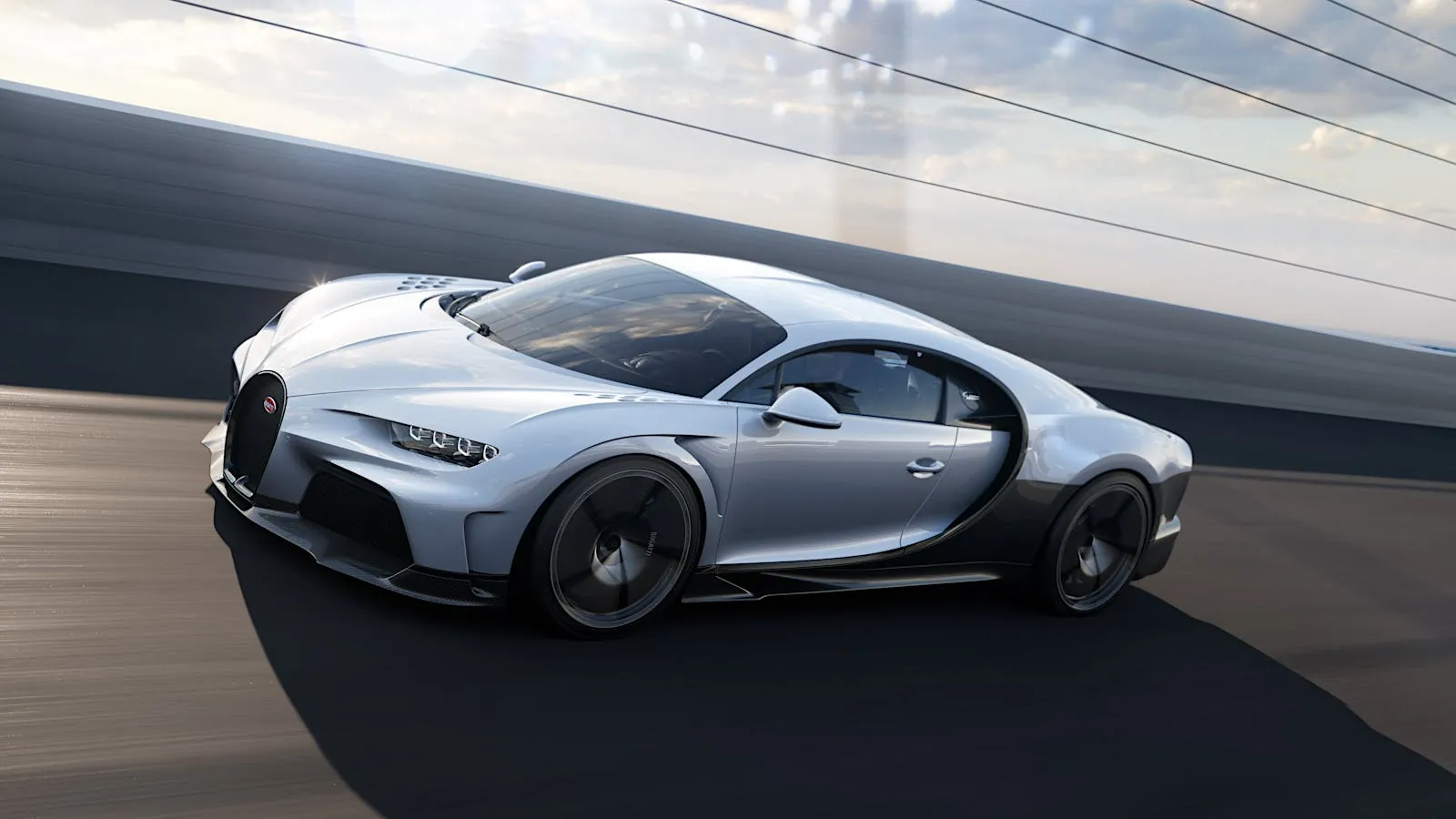
The Chiron (420 km/h) and the Chiron Super Sport (440 km/h) share the W16 heart and all-wheel drive — but the Super Sport answers "can extreme speed and comfort coexist" with a longer tail, more power and lower drag. Grand Tourisme, established.
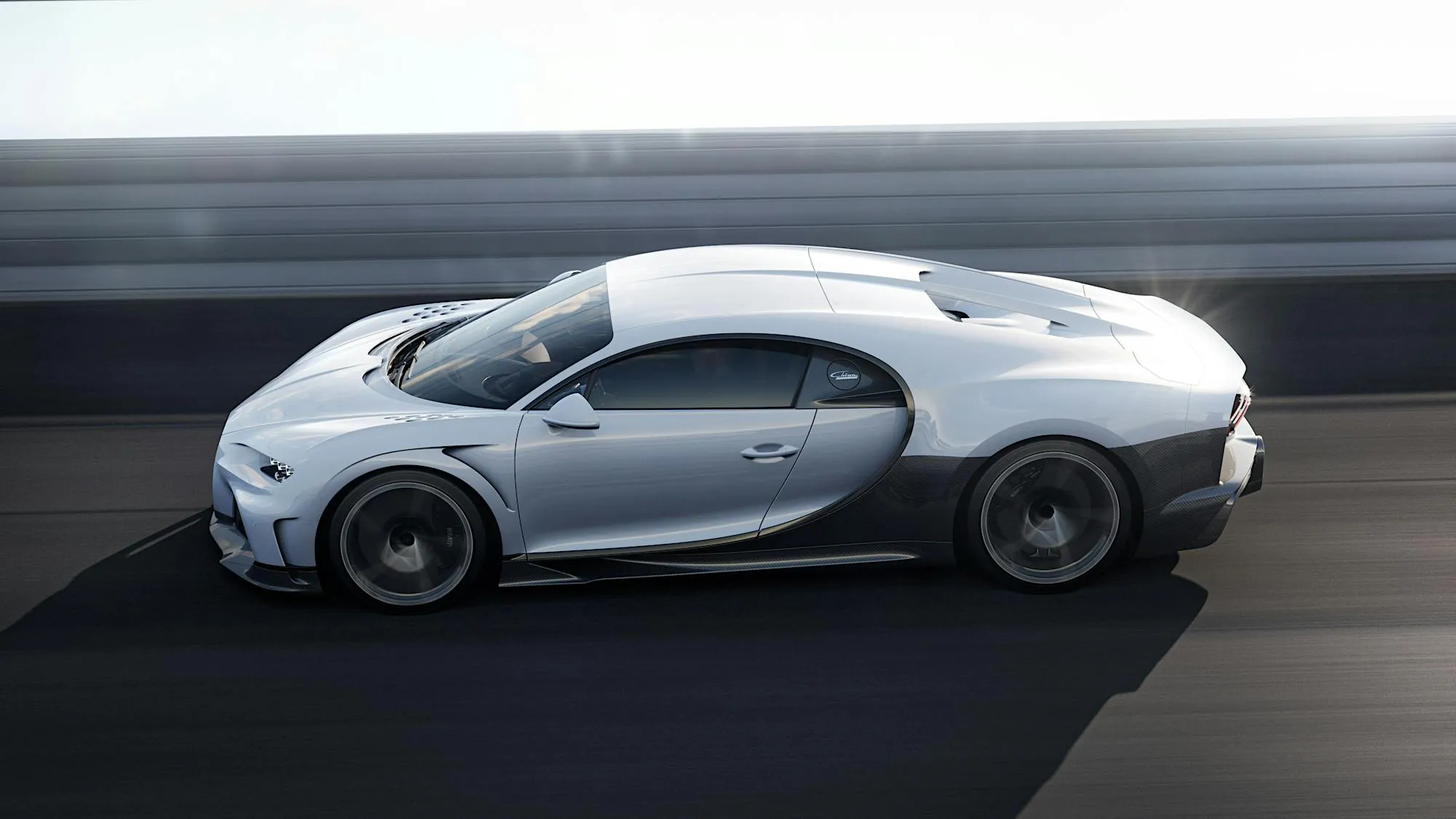
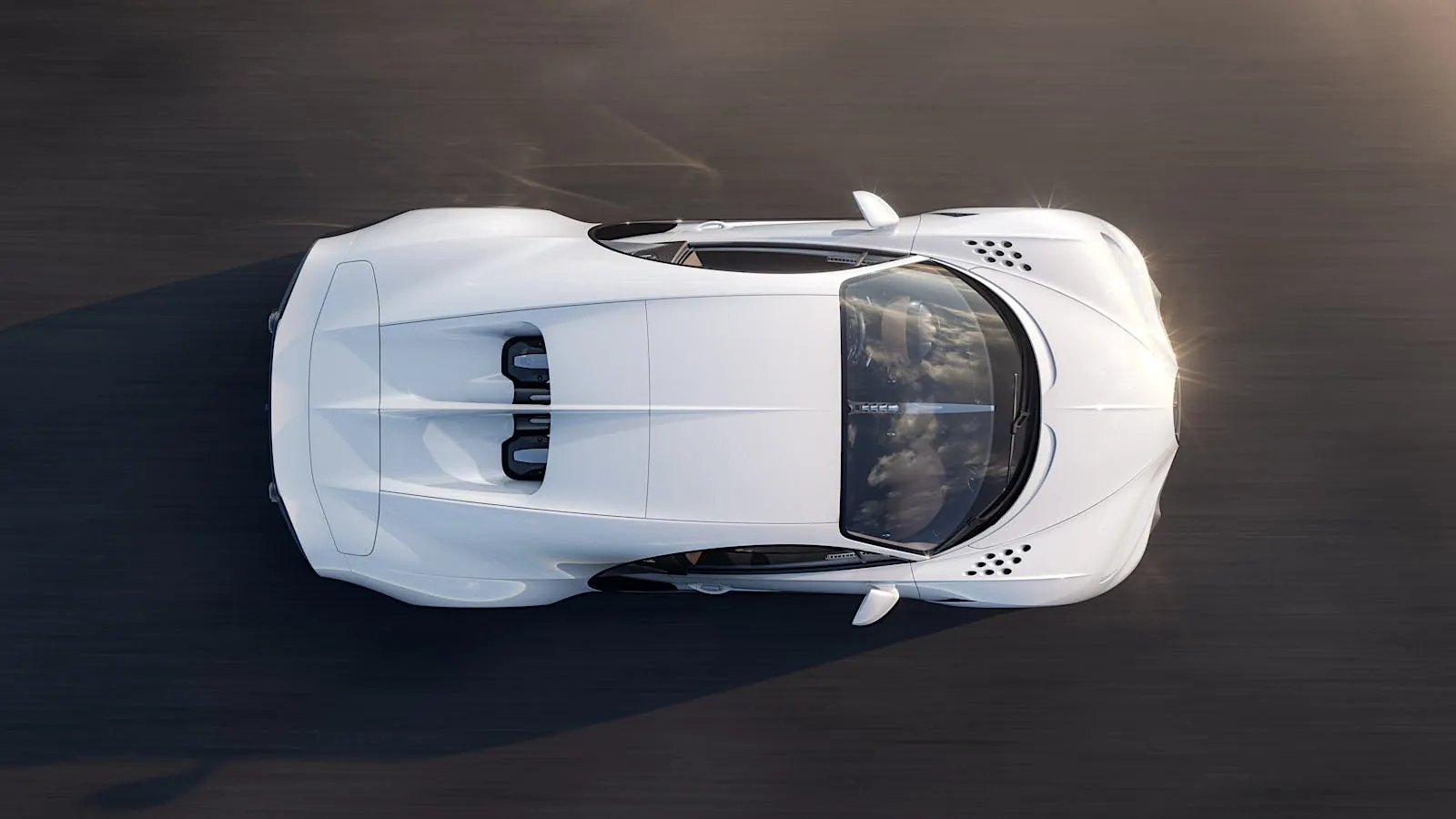
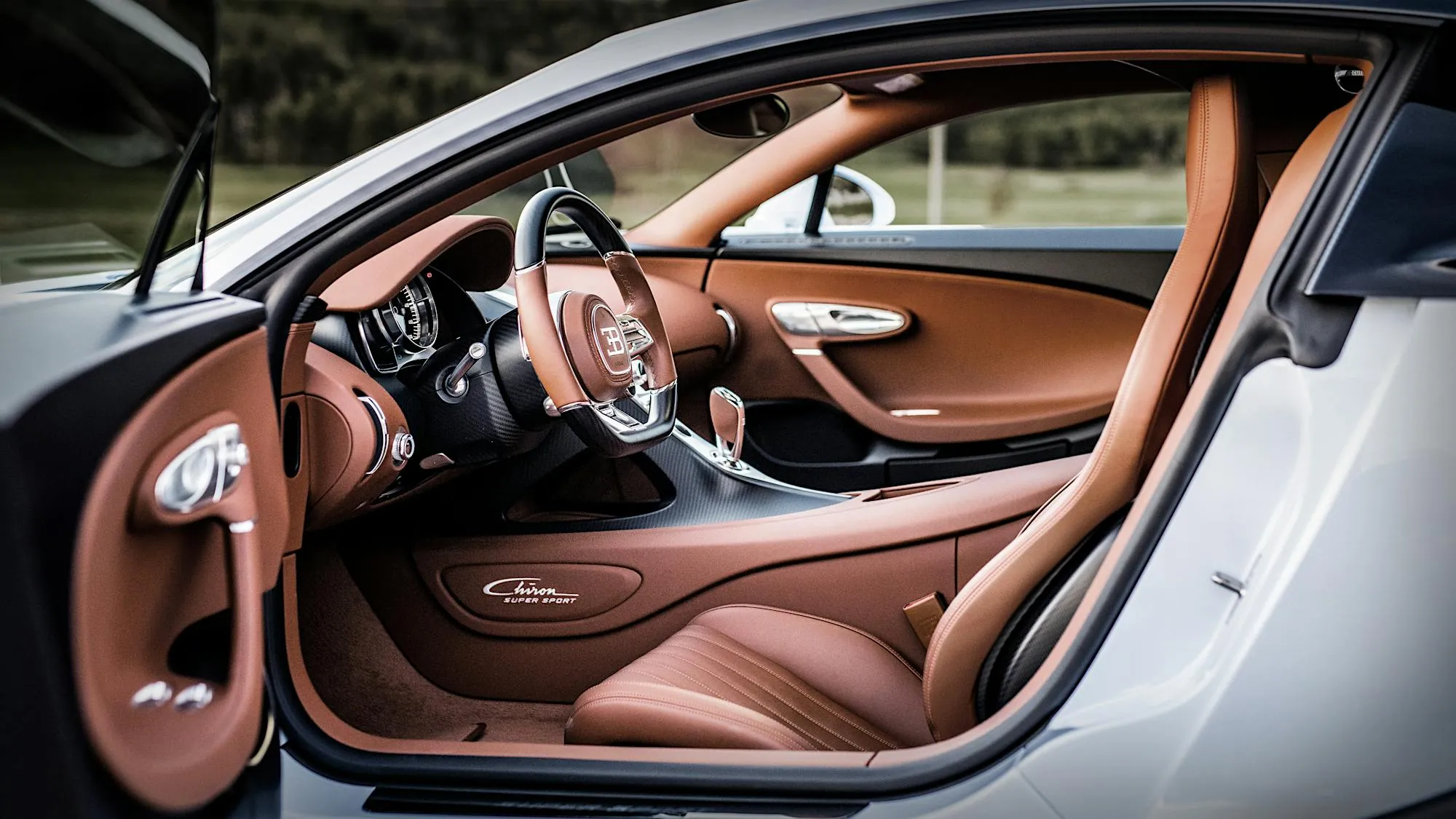
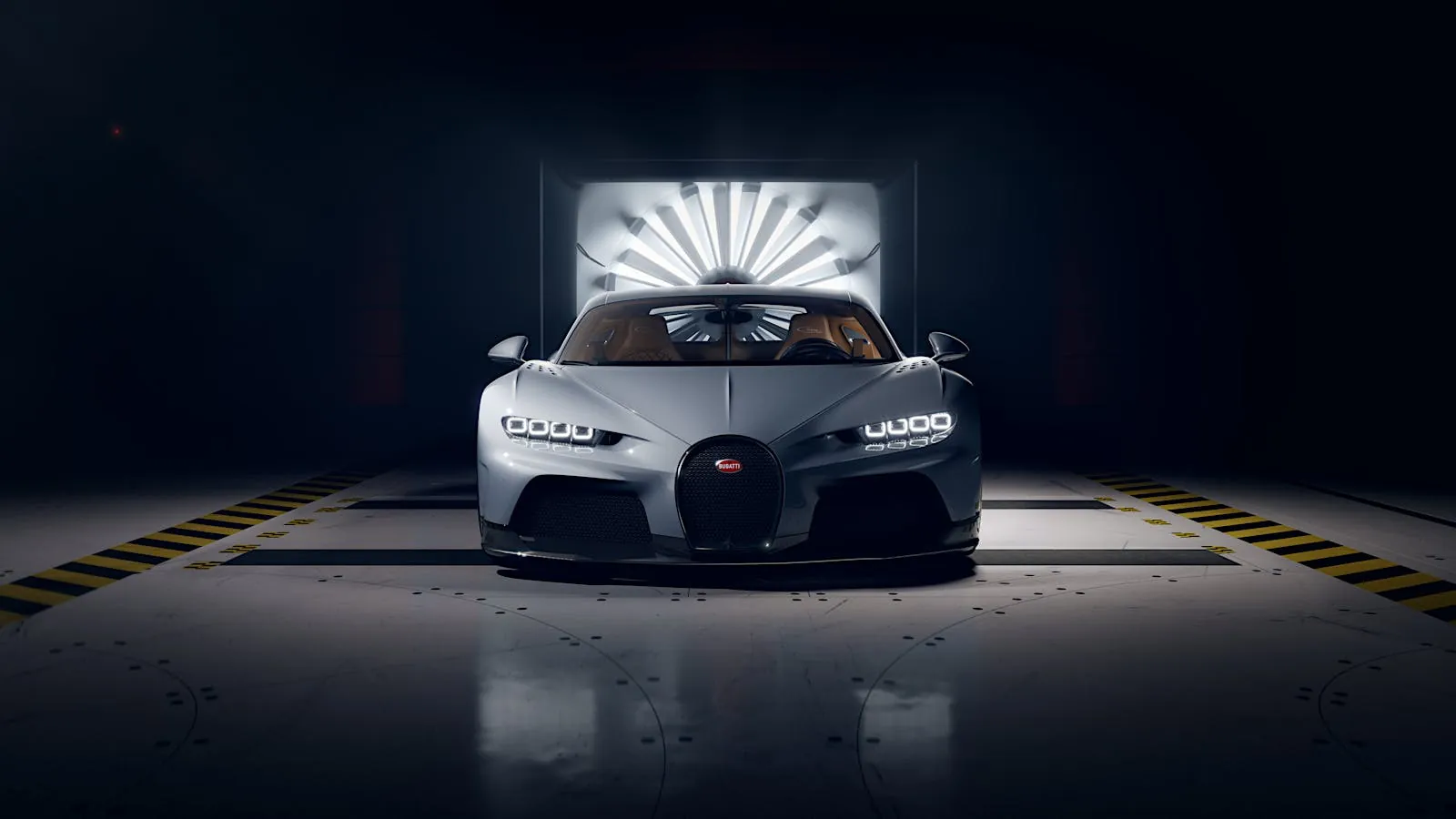
"Form follows performance" — from the front splitter to the rear diffuser, every centimetre of the skin is designed for top speed.
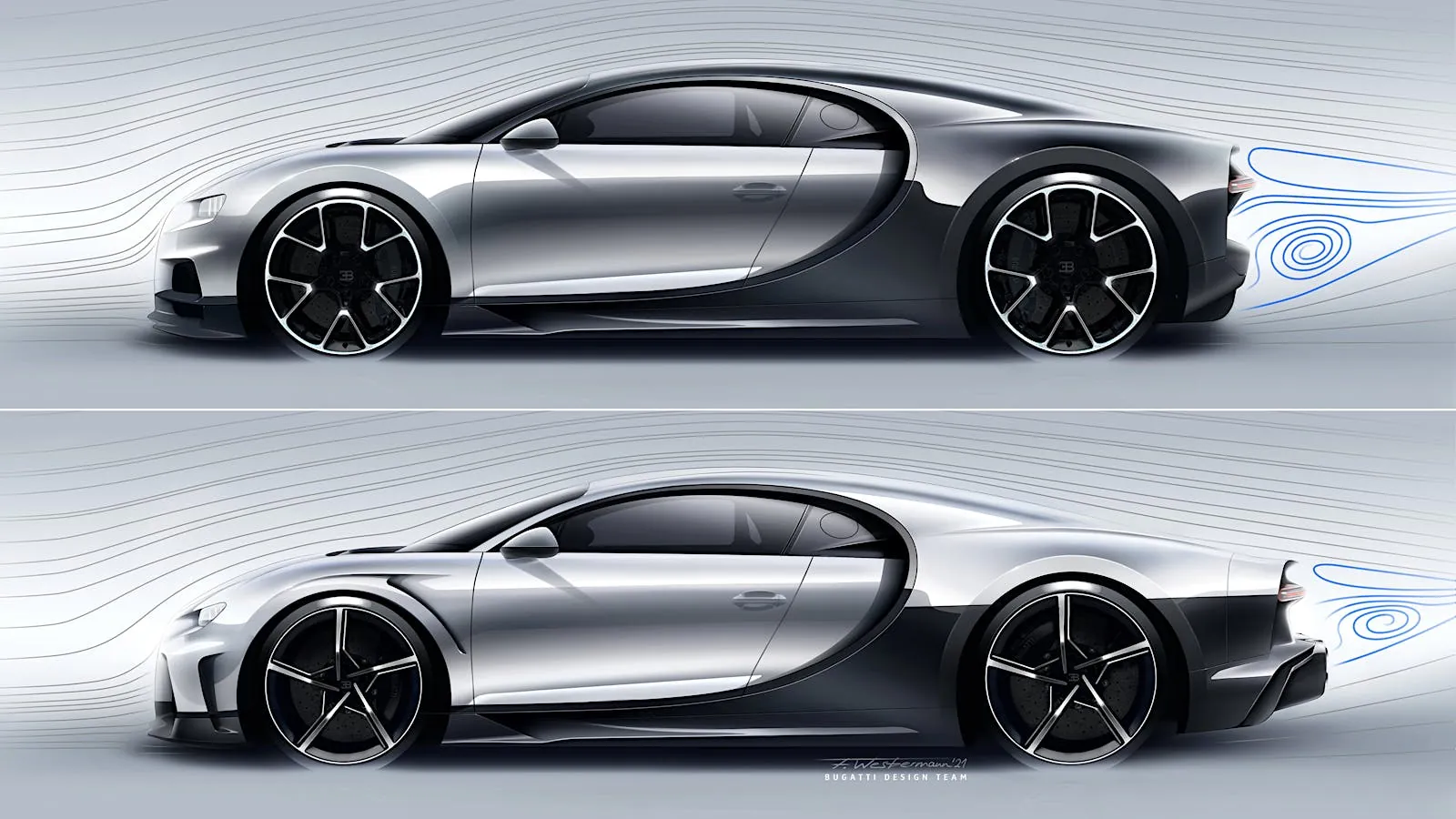
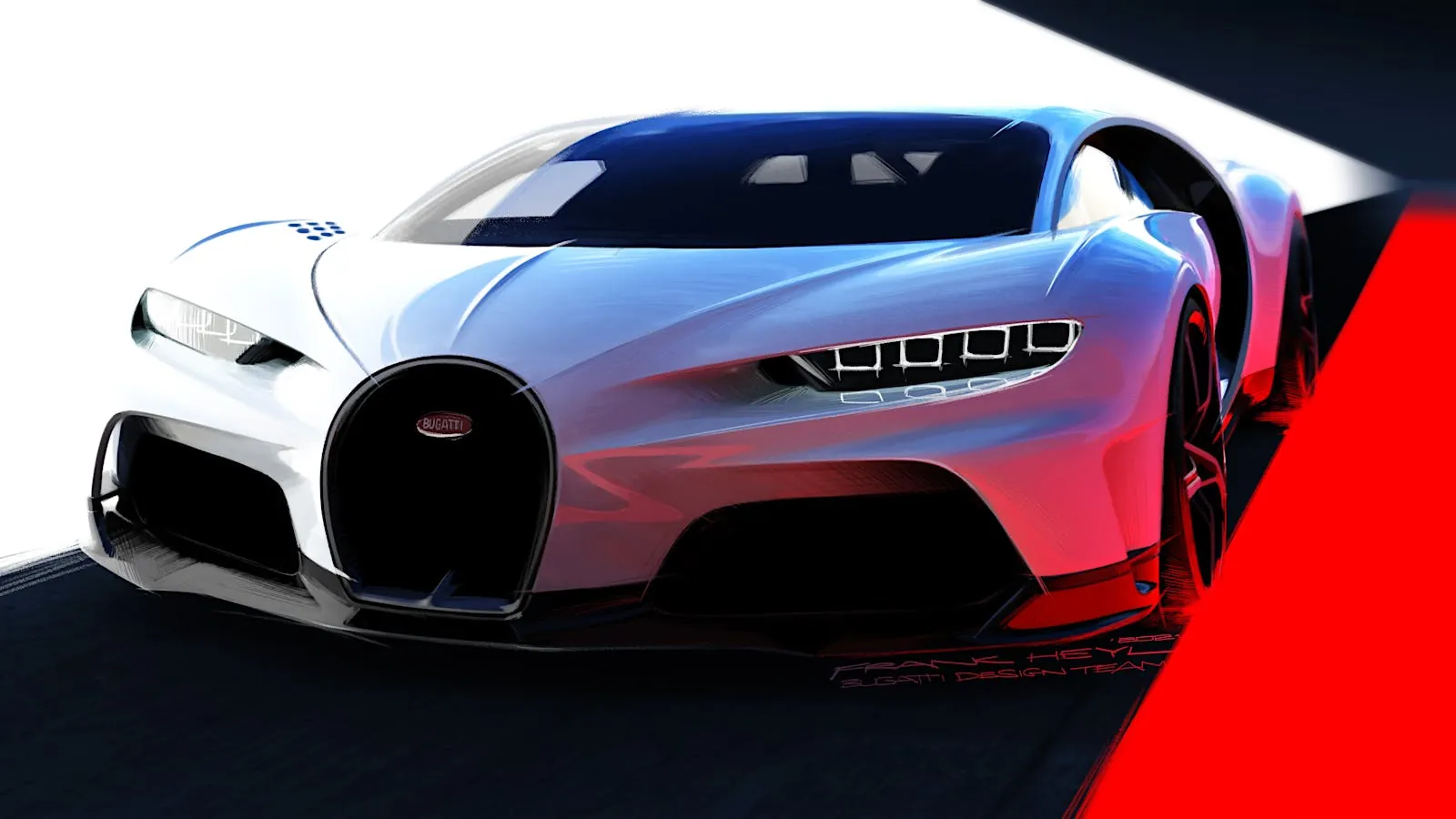
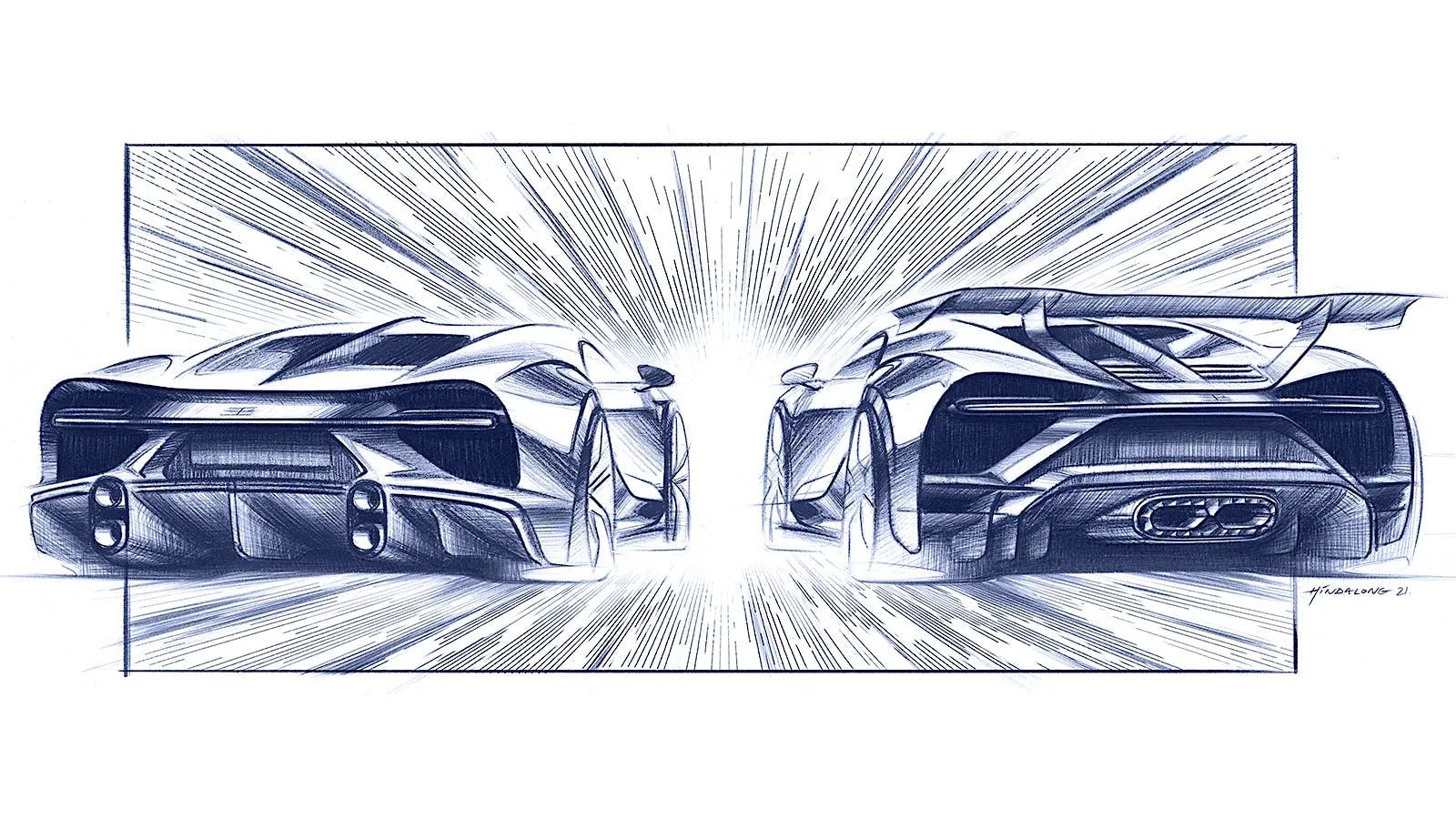
"Only perfect incoming airflow will keep harmful turbulence at bay." — Frank Heyl. Scroll — each answer unfolds.
Months in the wind tunnel — just enough downforce to stay stable at extreme speed.
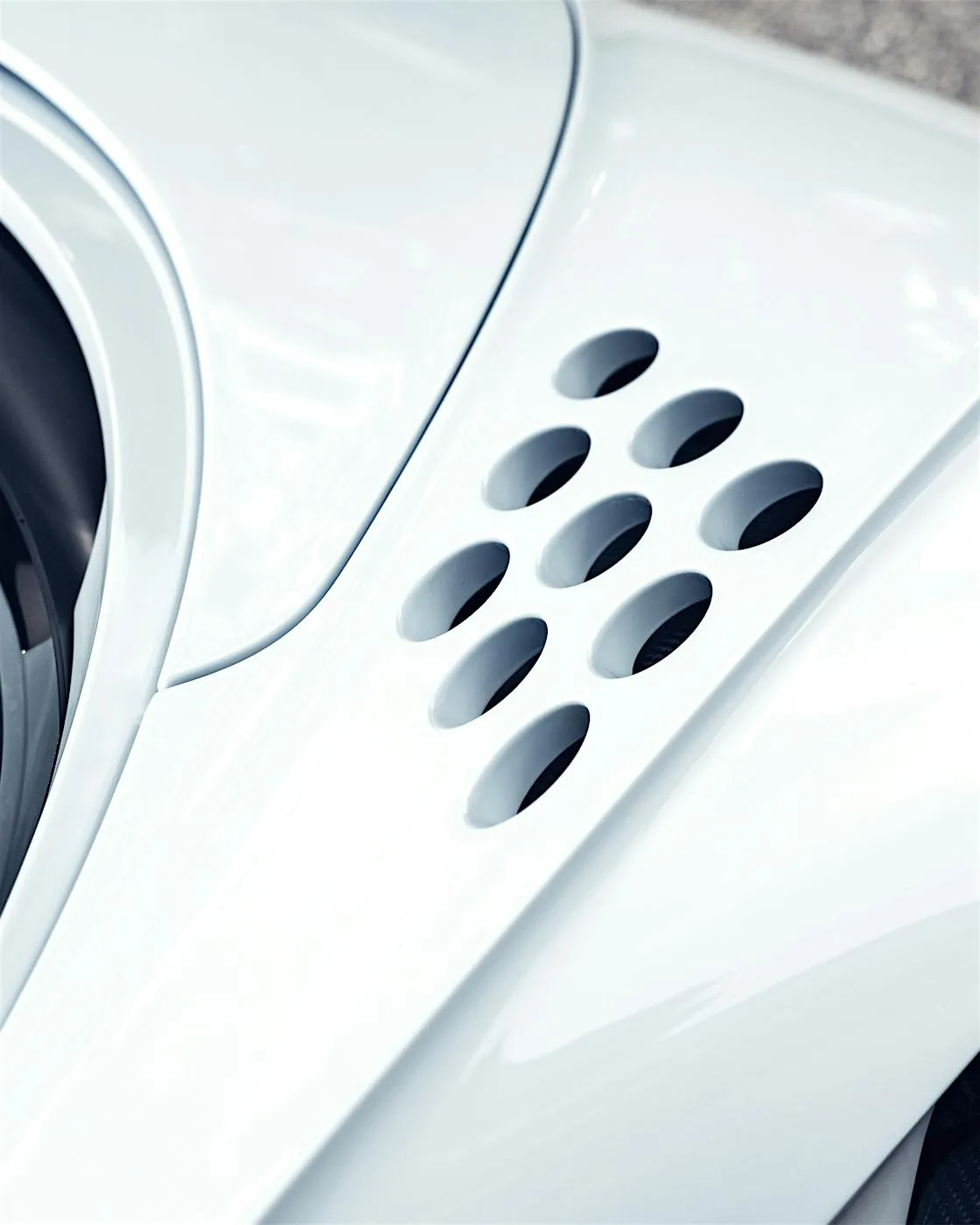
Nine cylindrical outlets pay homage to the EB 110 Super Sport — 20 to 30 kg of downforce at 380 km/h, without adding resistance.
Air curtains keep the flow tight to the body; radiator airflow is about 8% higher than the Chiron's.
The longtail cuts the tear-off area by 40% — and the proportions are wider, lower-slung.
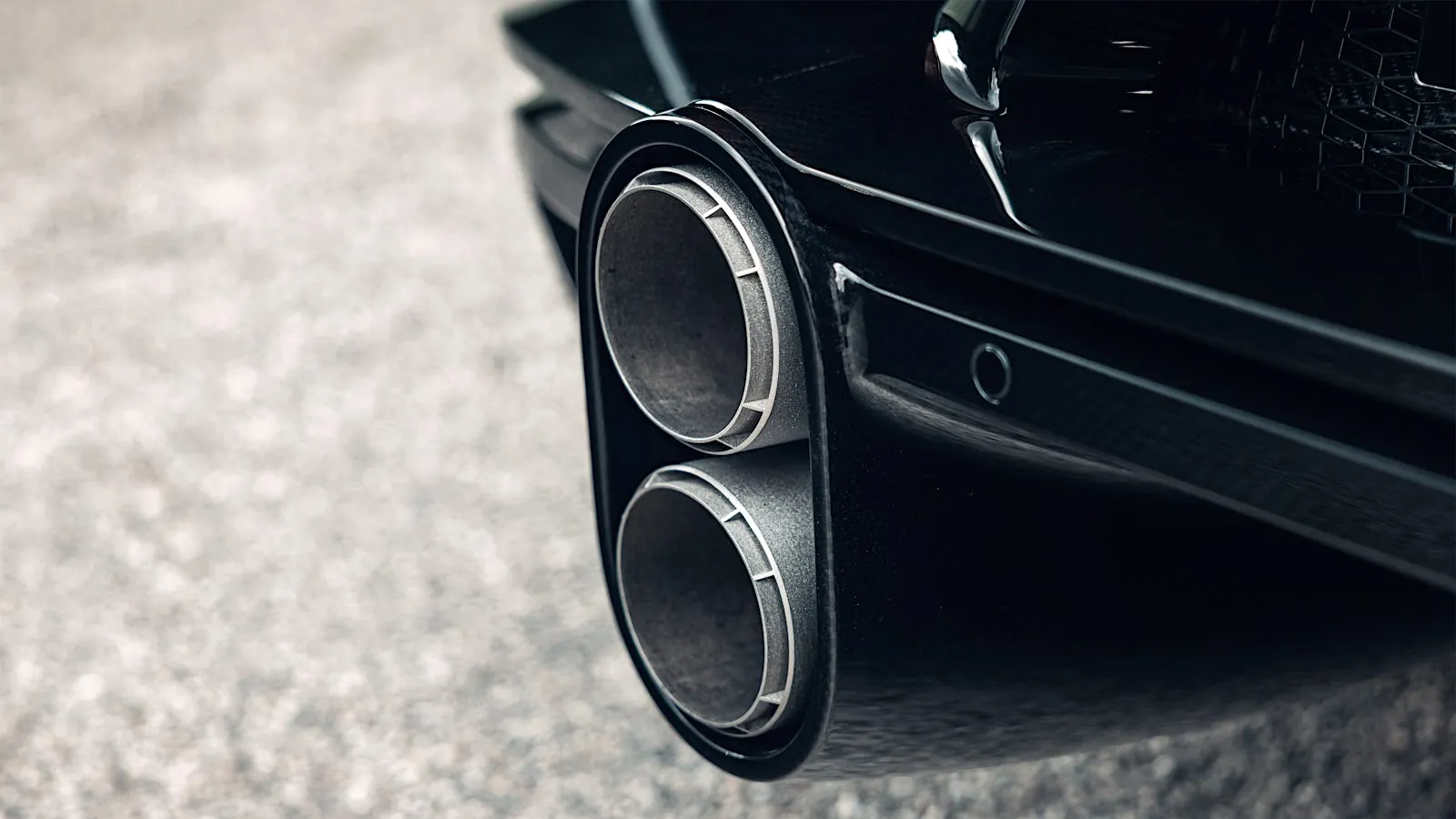
Exhausts moved to the sides, freeing the center for the diffuser — total size up 32%. Titanium 3D-printed bezels as thin as 0.4 mm.
In top-speed mode the wing retracts almost completely. Drag coefficient 0.35, neutral lift.
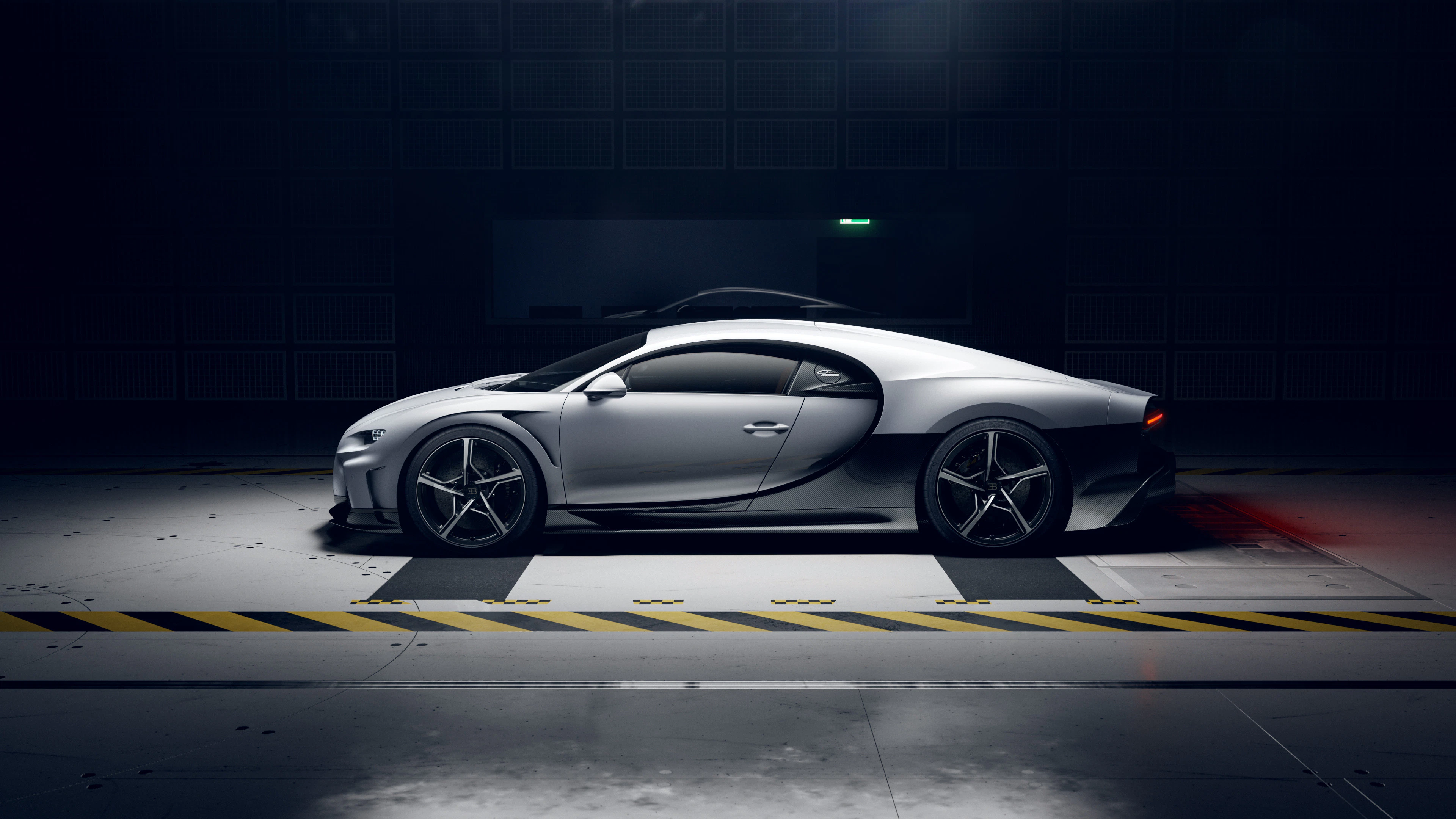
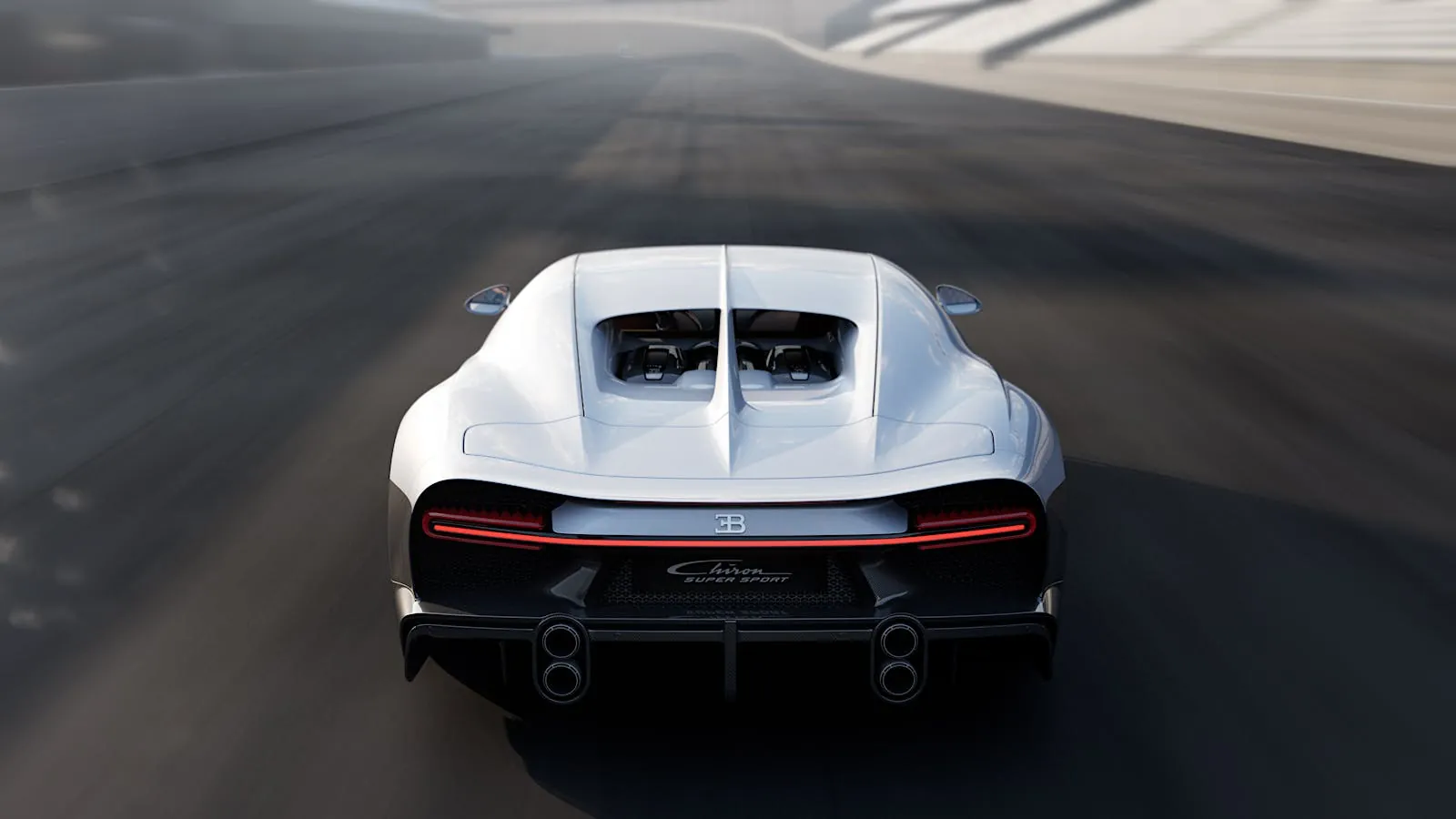
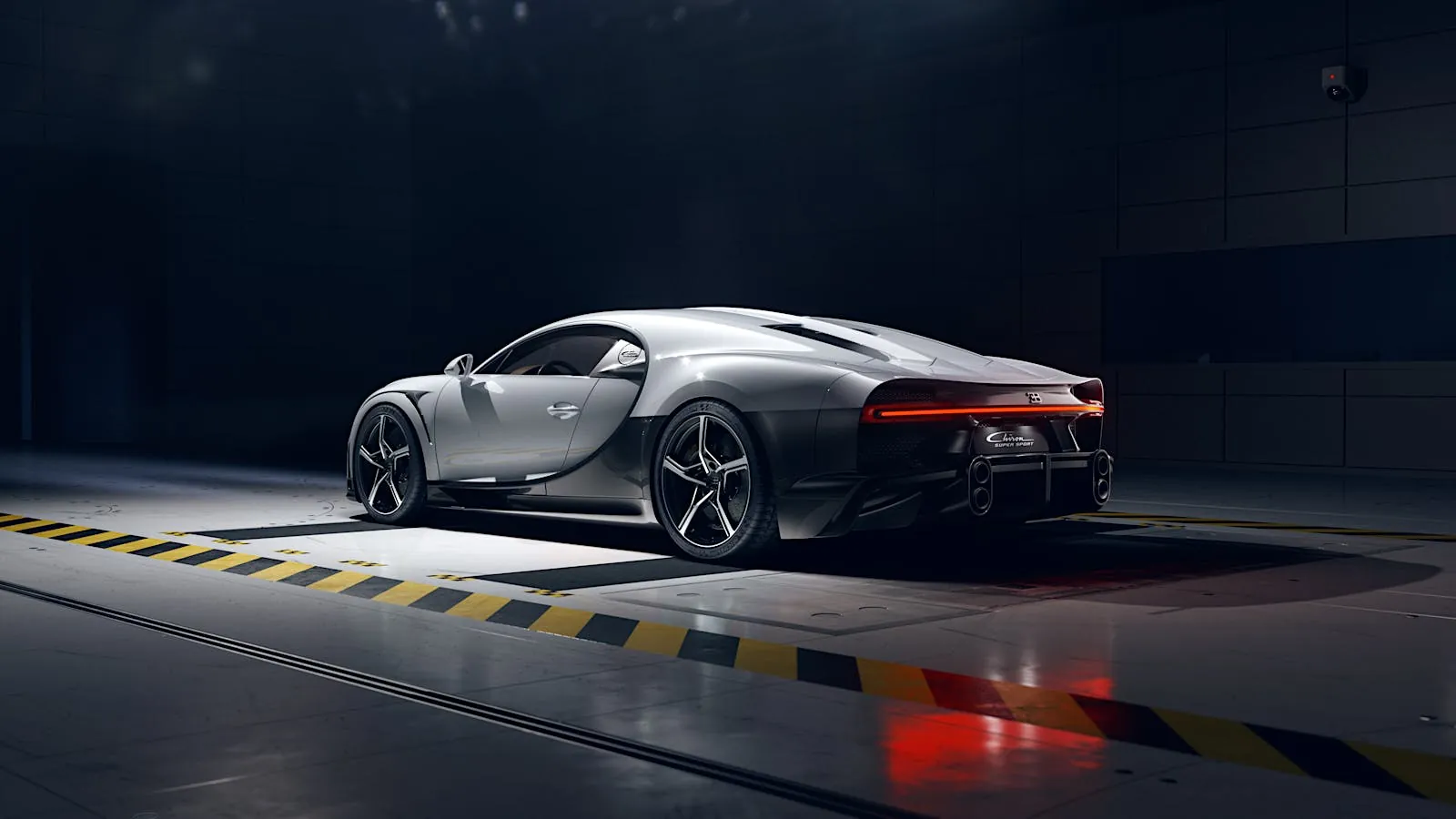
Above 400 km/h, it generates just enough downforce to stay stable.
From a W16 strengthened to 1,600 PS, to every tyre at 440 km/h — engineering makes power controllable.
8.0 litres, 16 cylinders, four turbochargers — more than 3,500 parts assembled entirely by hand. First fired in 2001 at 1,000+1 PS, it evolved over two decades: 1,000 PS in the Veyron, 1,200 PS in the Super Sport, 1,500 PS in the Chiron and 1,600 PS in the Super Sport. An asymmetric 45-degree firing order gives it a voice like no other.
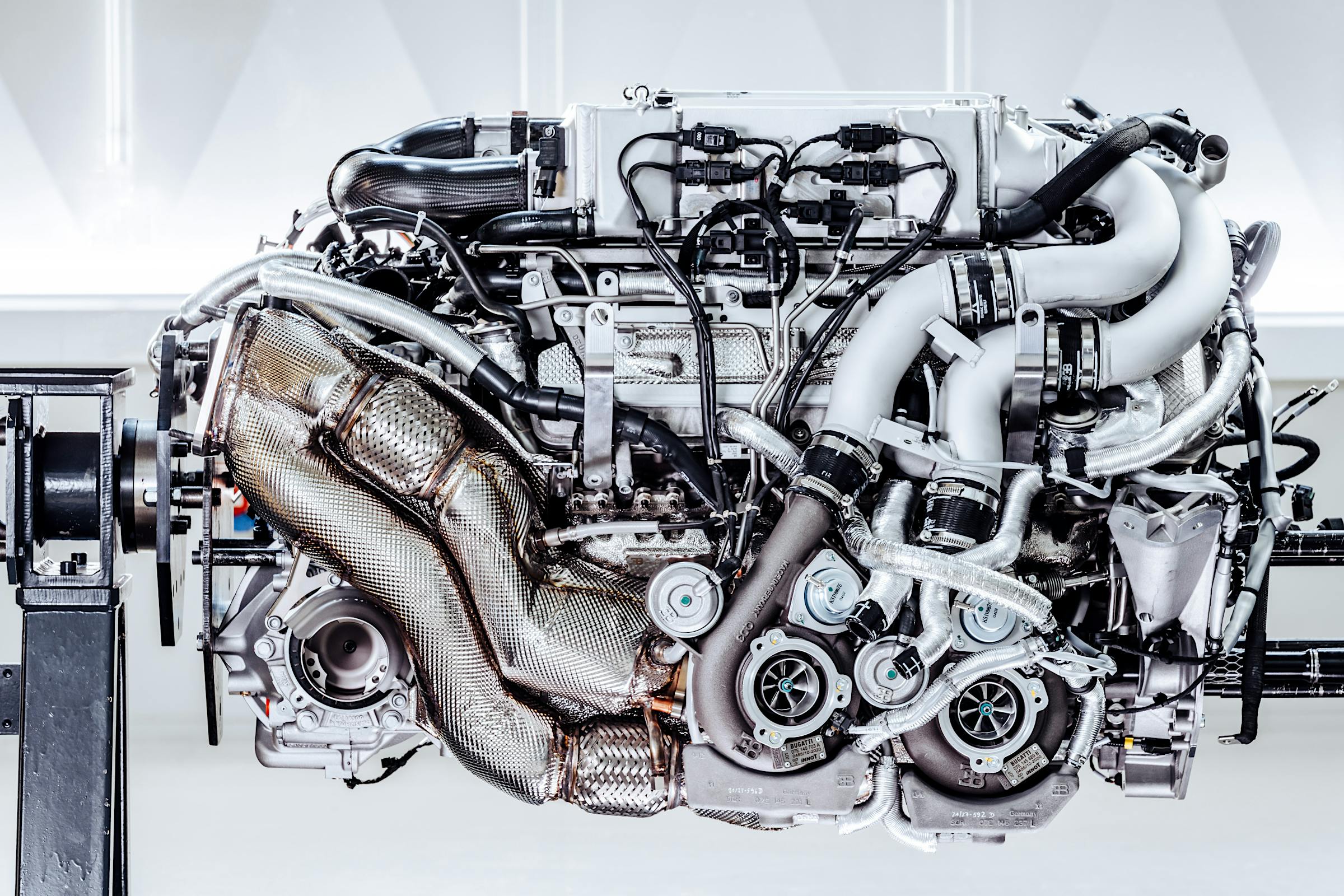
8.0 litres, 16 cylinders, four turbochargers — no larger than a V12, weighing about 400 kg, with more than 3,500 parts assembled entirely by hand. From the Veyron's 1,000 PS to the Super Sport's 1,600 PS, this engine defined Bugatti's era of extreme speed.
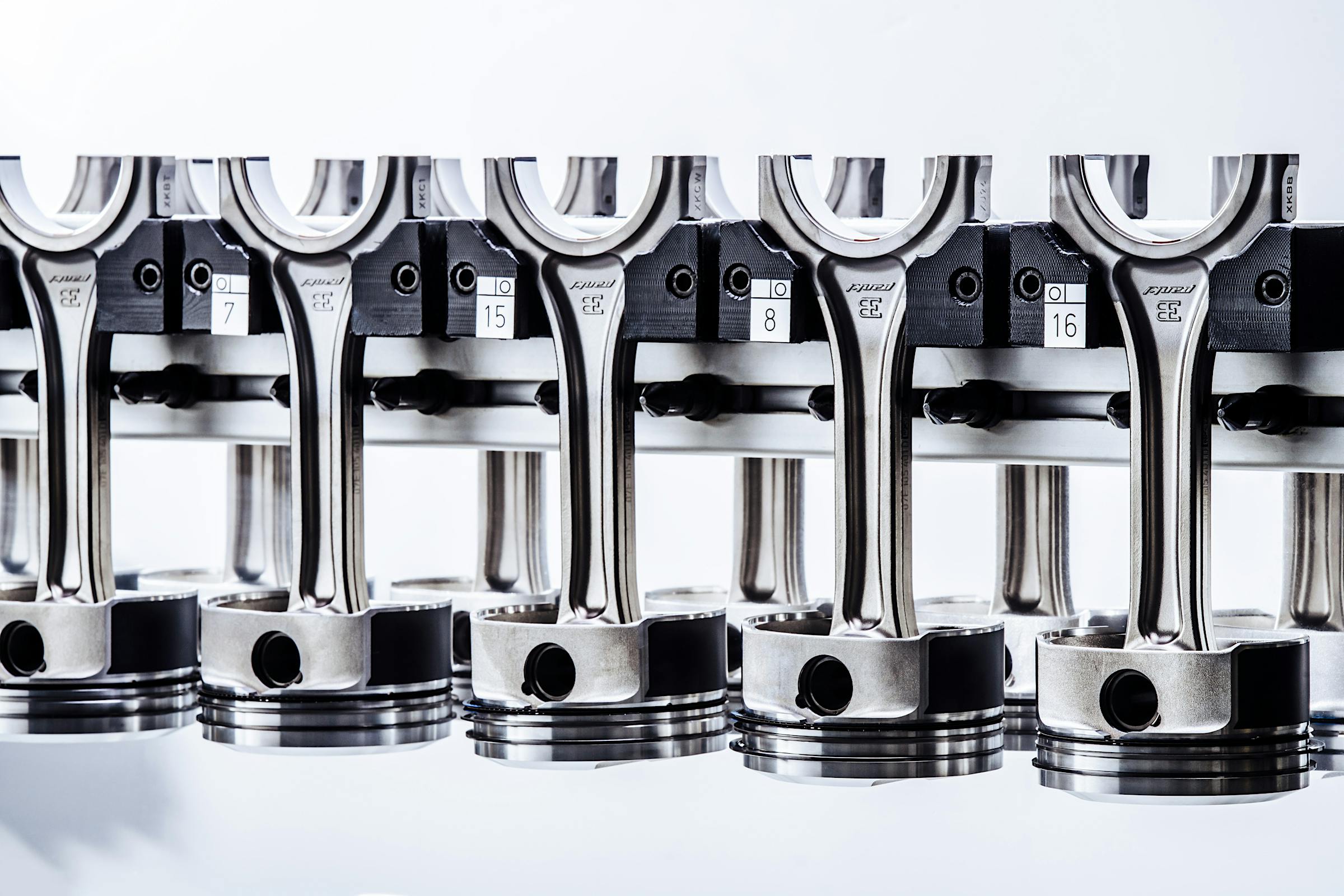
Every burst from the 16 cylinders is carried by eight connecting rods.
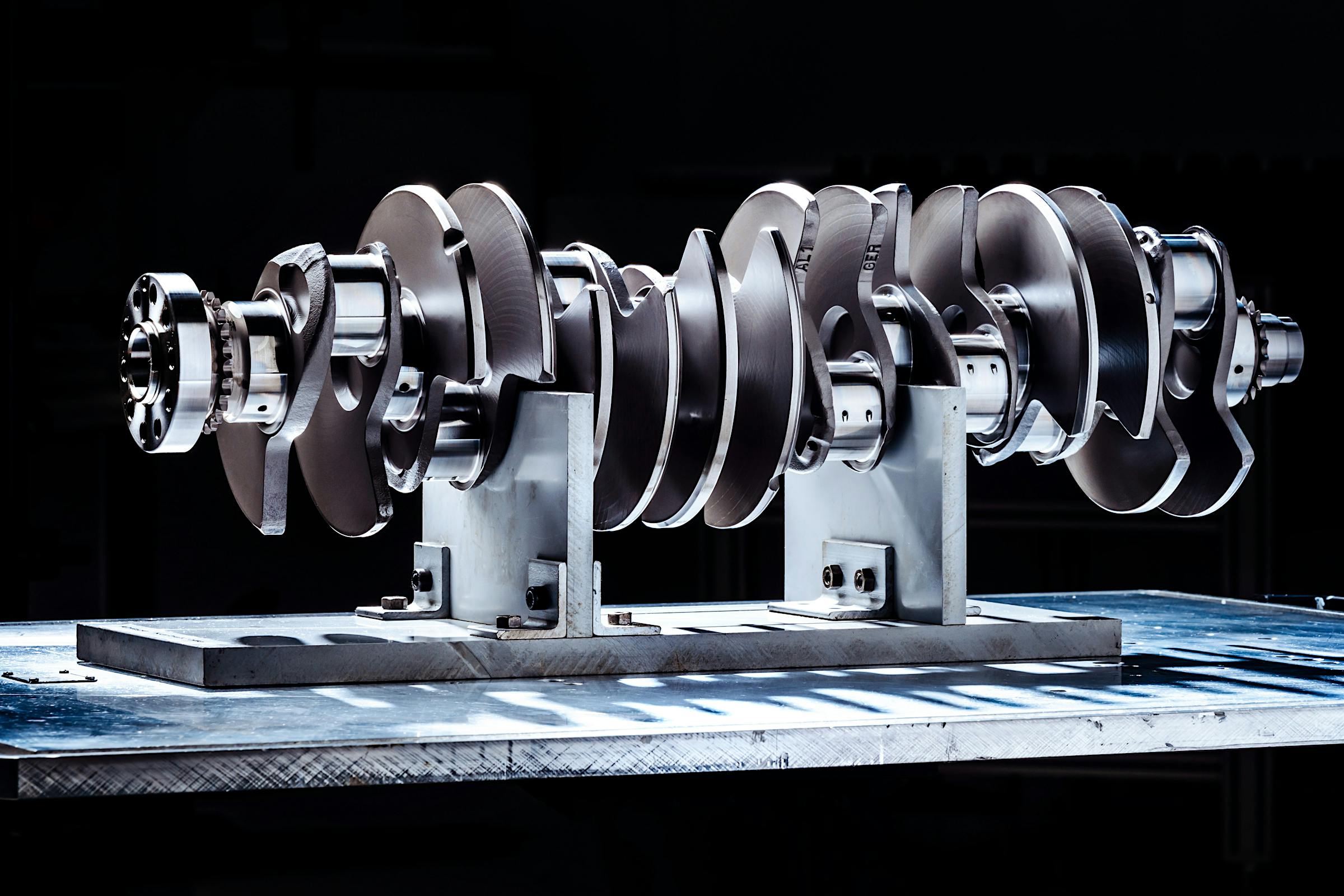
The reciprocation of 16 cylinders converges on a single crankshaft — balance and strength in one.
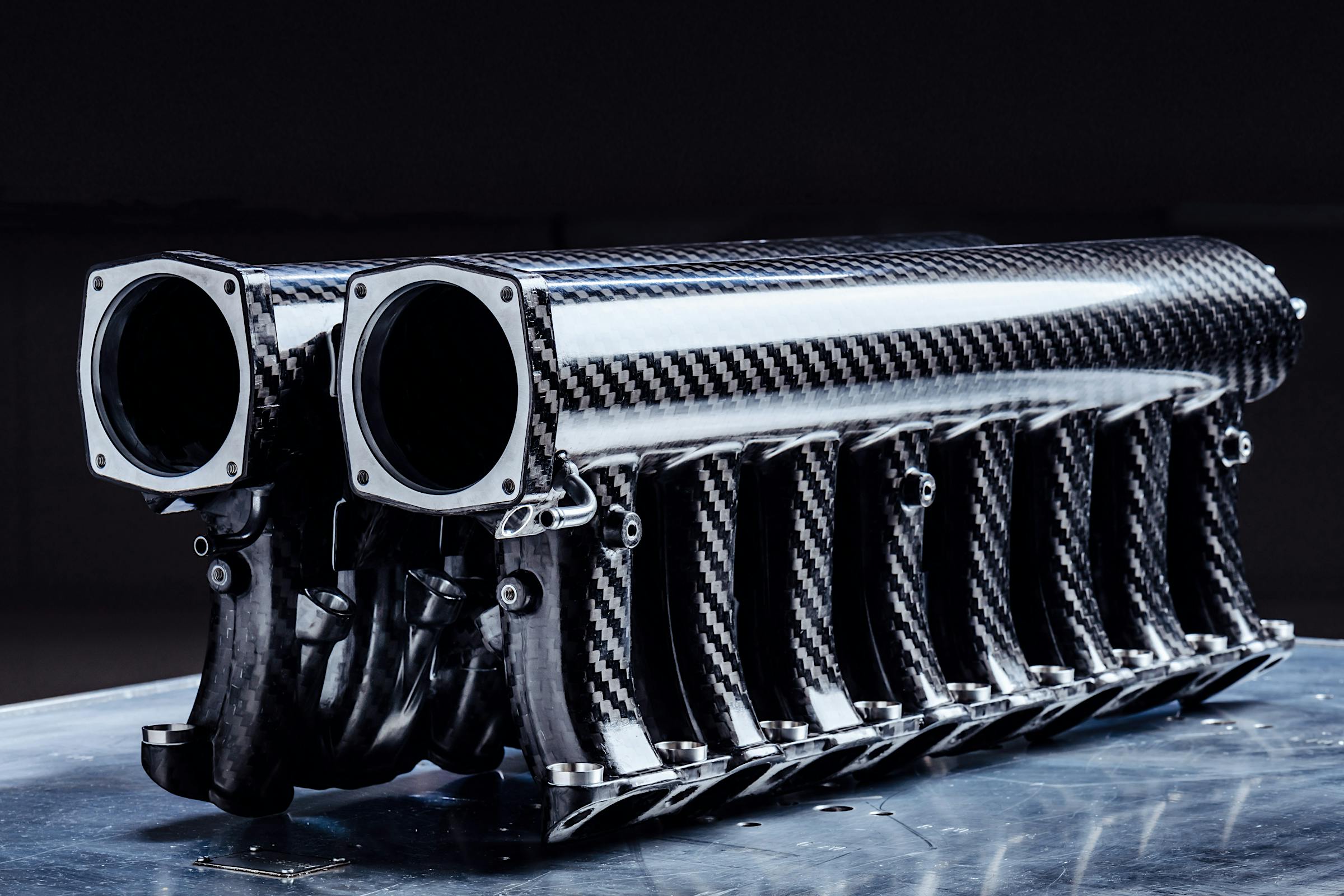
A twin-inlet carbon manifold feeding all 16 cylinders.
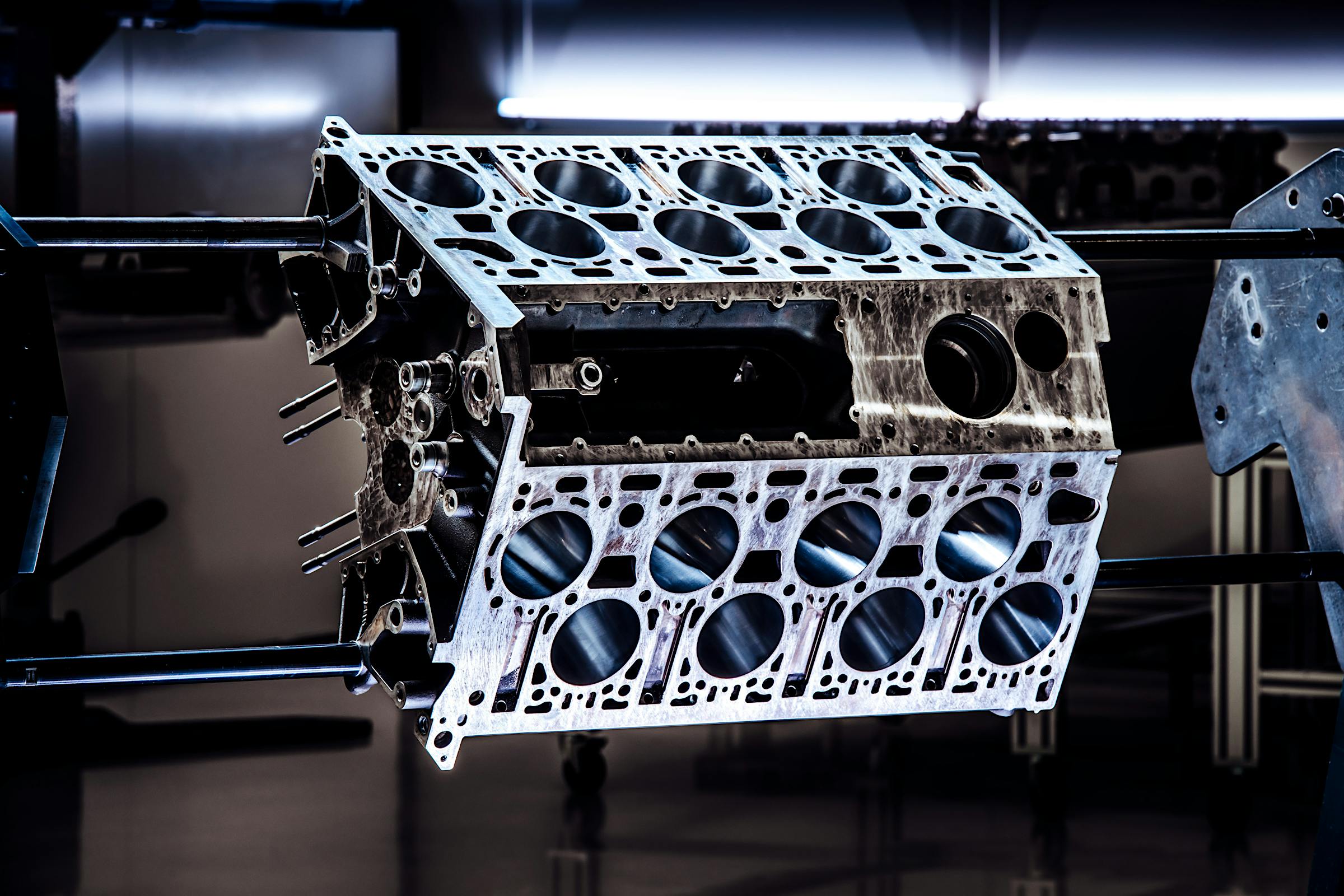
Two eight-cylinder banks arranged in a W — compactness as an engineering miracle.
At 420 km/h, a tyre revolves more than 50 times a second, with forces on the tread around 4,000 g. Only the Chiron Super Sport can push this dyno — capable of 480 km/h — to its limits.
Dyno-verified outputSingle roller · wheel output
Tyre rotation at 420 km/hOver 50 revolutions per second
Force on the treadApprox. 4,000 g
Dyno simulation limit1,200 kW per roller
Based on the record-breaking car — jet-black carbon, two orange stripes, limited to 30 units.
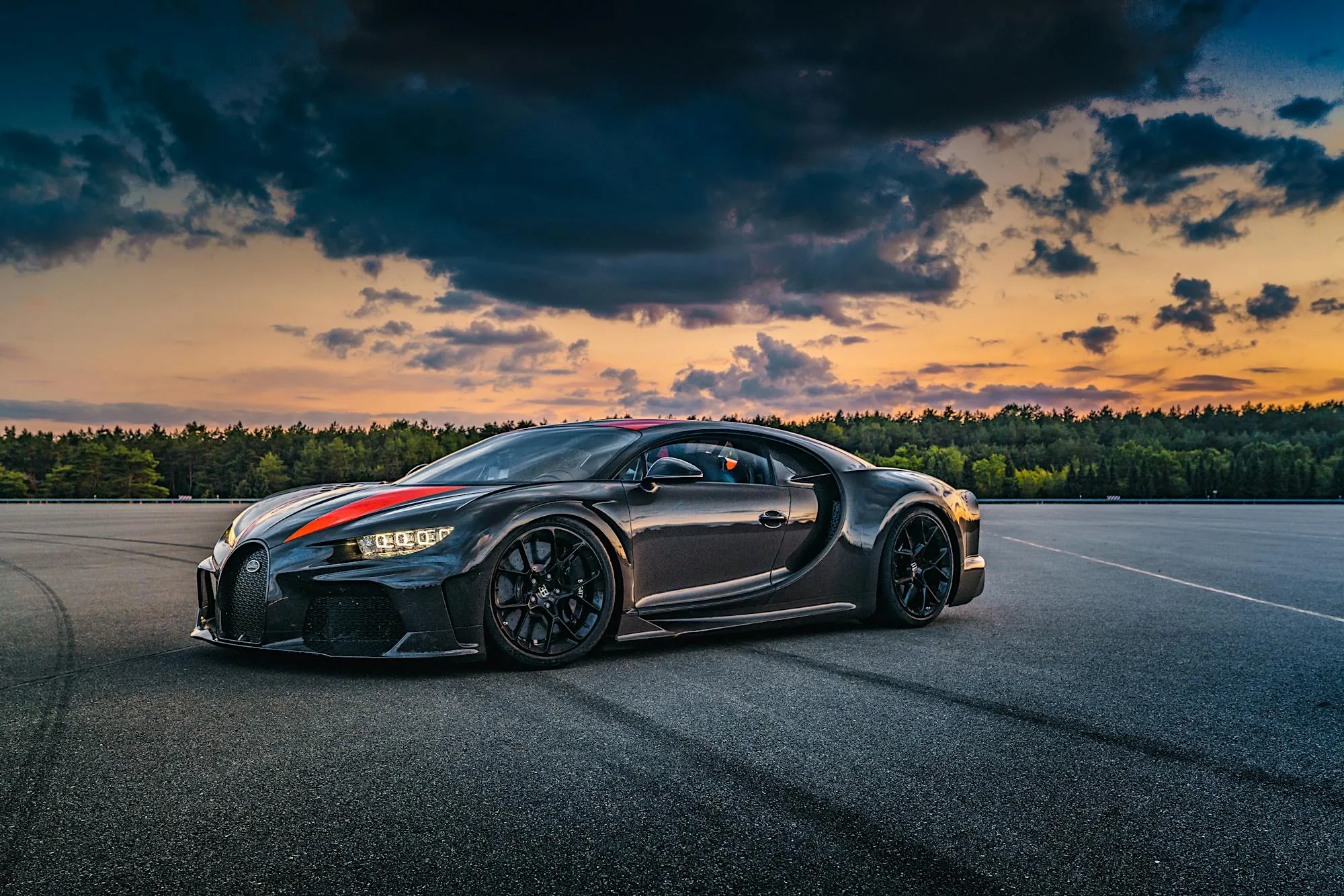
Unveiled in September 2019 at Bugatti's 110th anniversary in Molsheim. Exposed jet-black carbon fibre, two Jet Orange racing stripes running the full length; 1,600 PS — 100 more than the Chiron — with a new thermal management system.
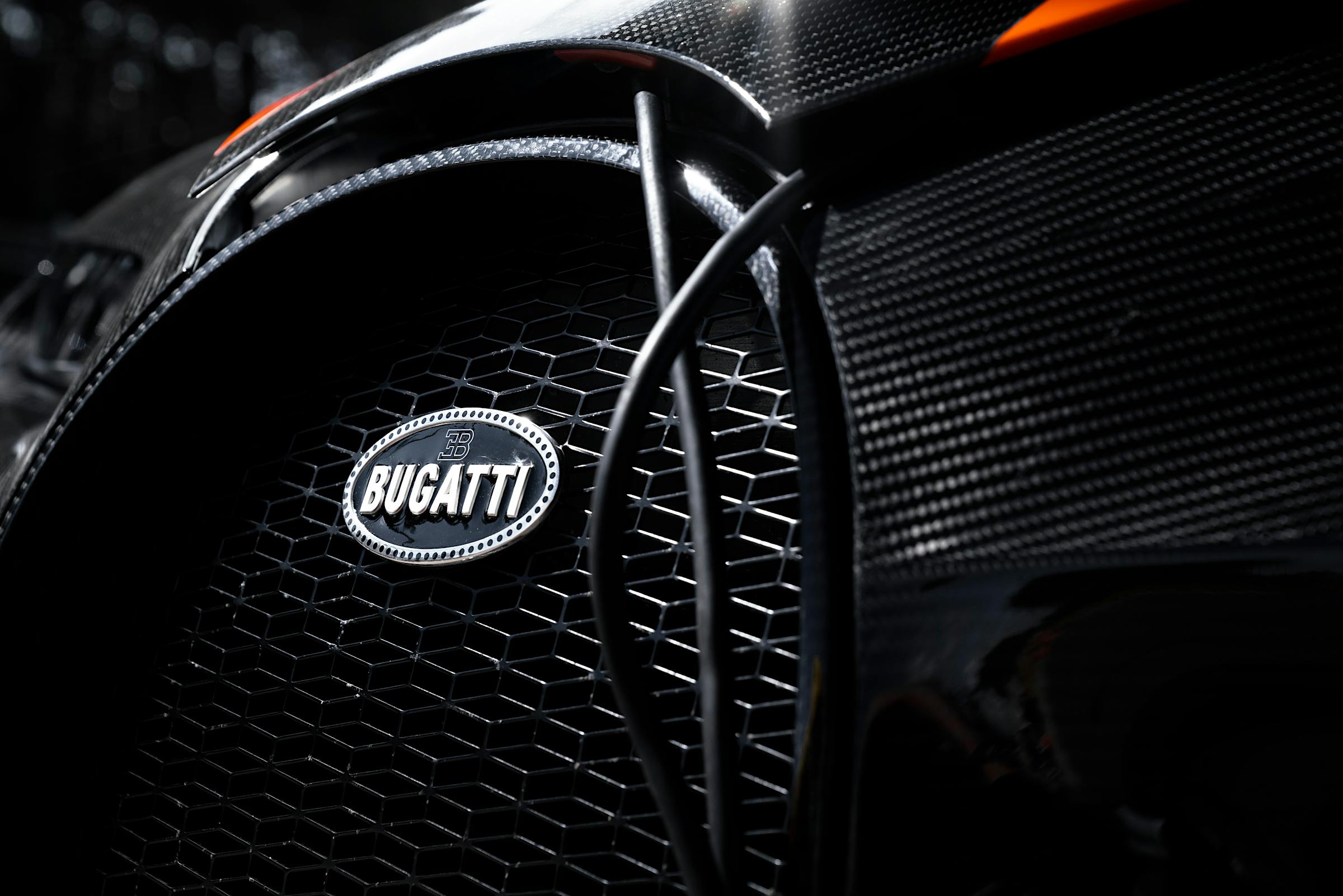
Honeycomb mesh and visible carbon fibre, the EB badge centred — identity, from the first glance.
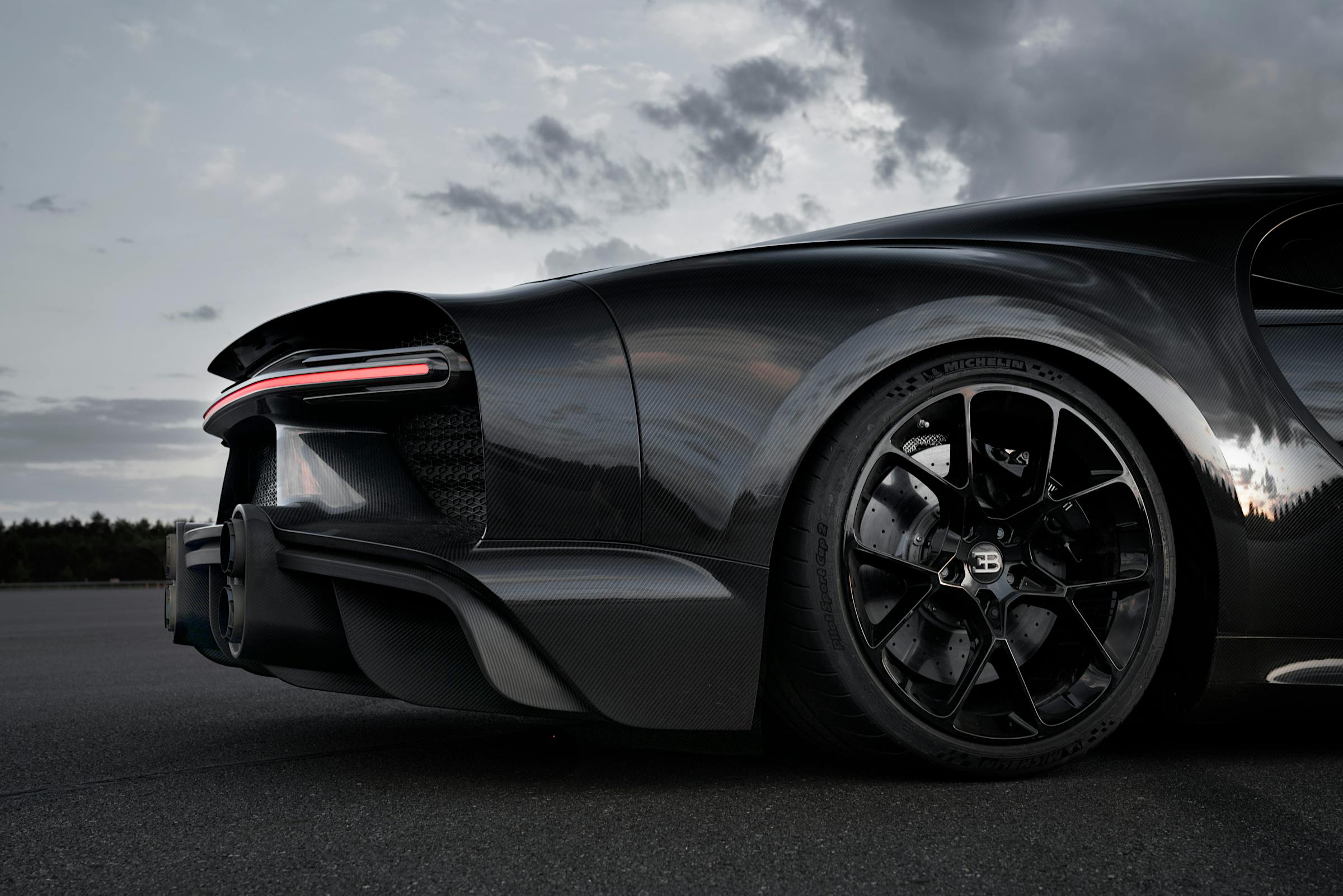
Carbon curves over 355 mm rear tyres — beyond the longtail, downforce continues.
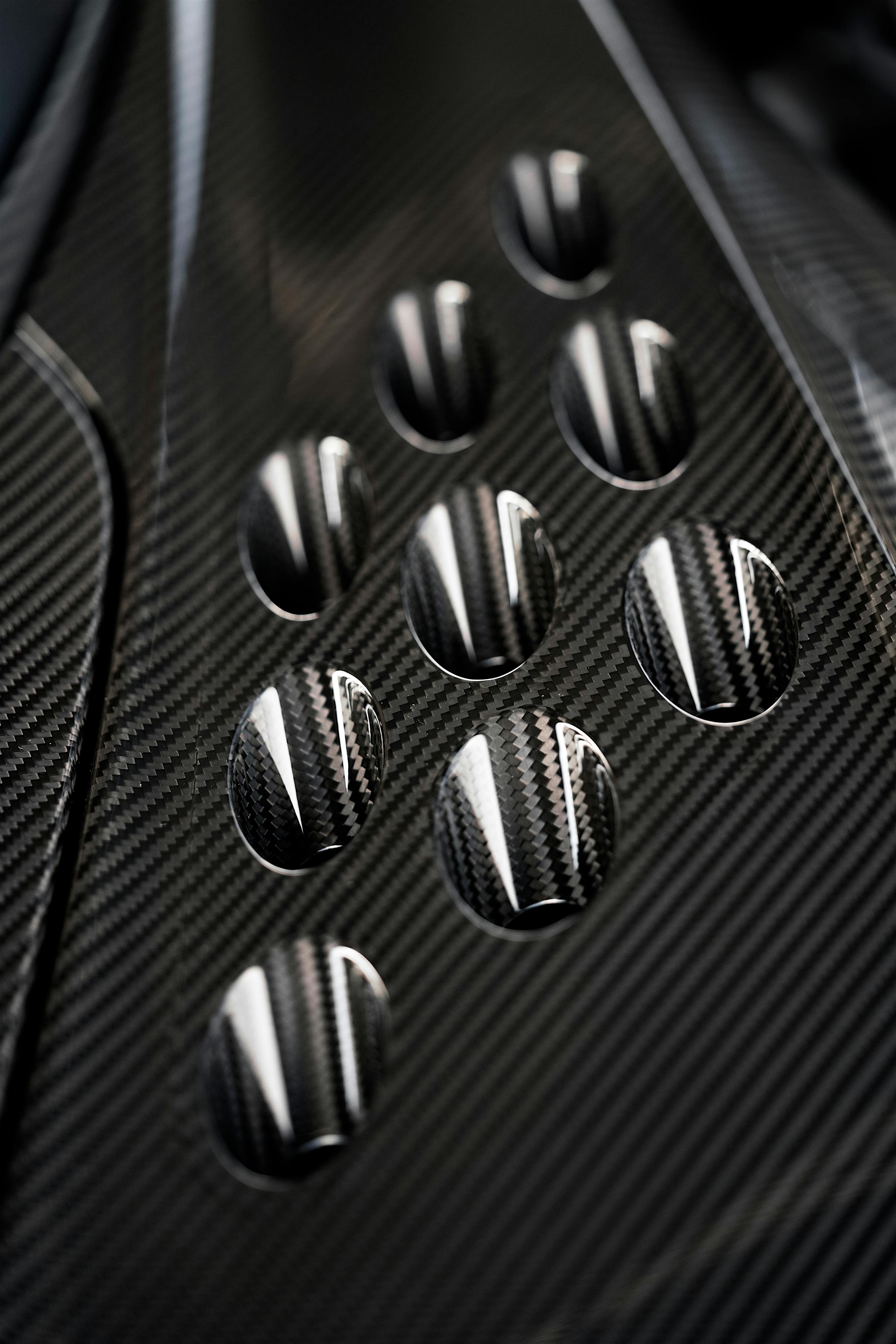
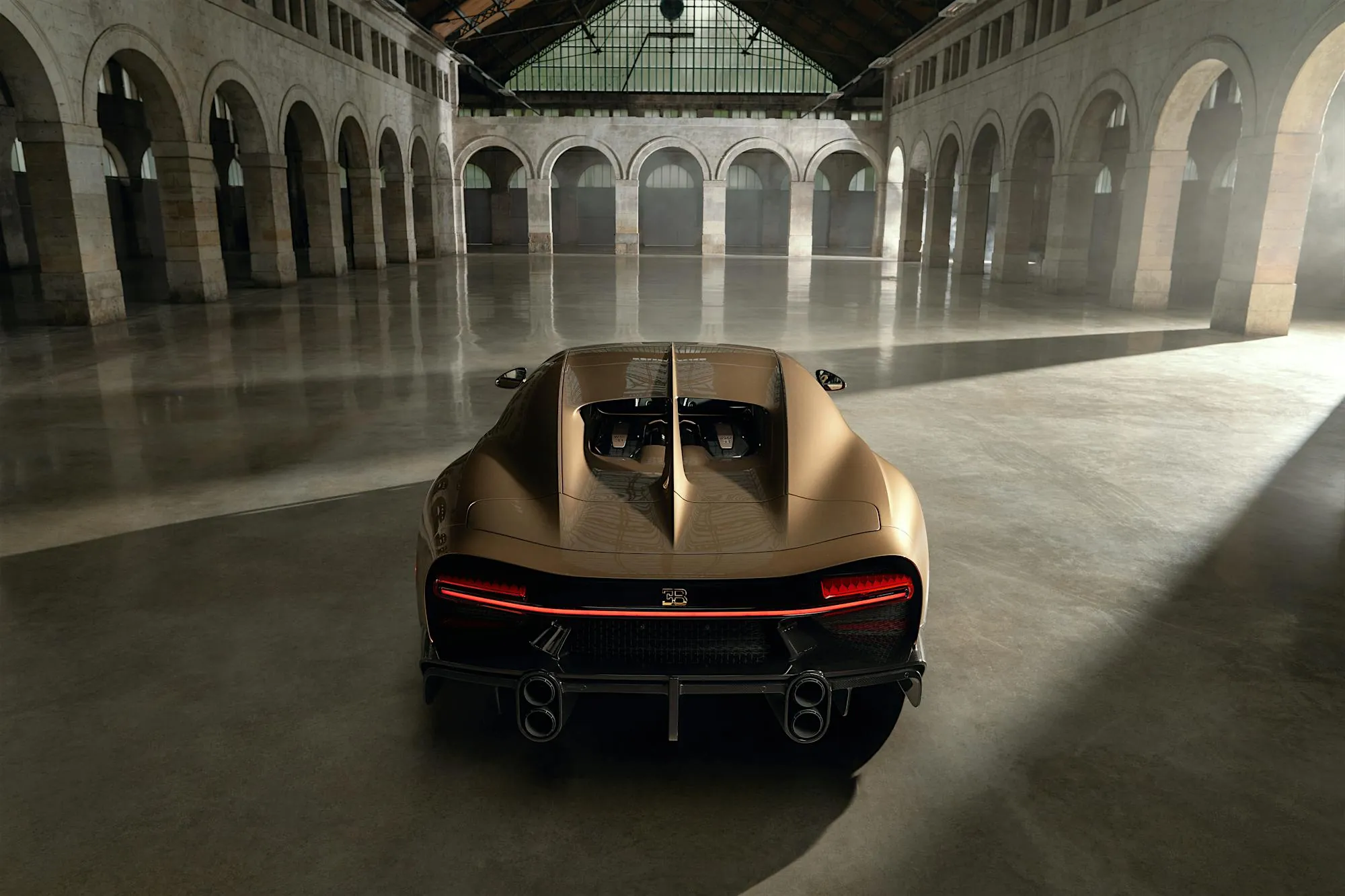
A circular vent array in woven carbon — sculpted for the W16's breath.
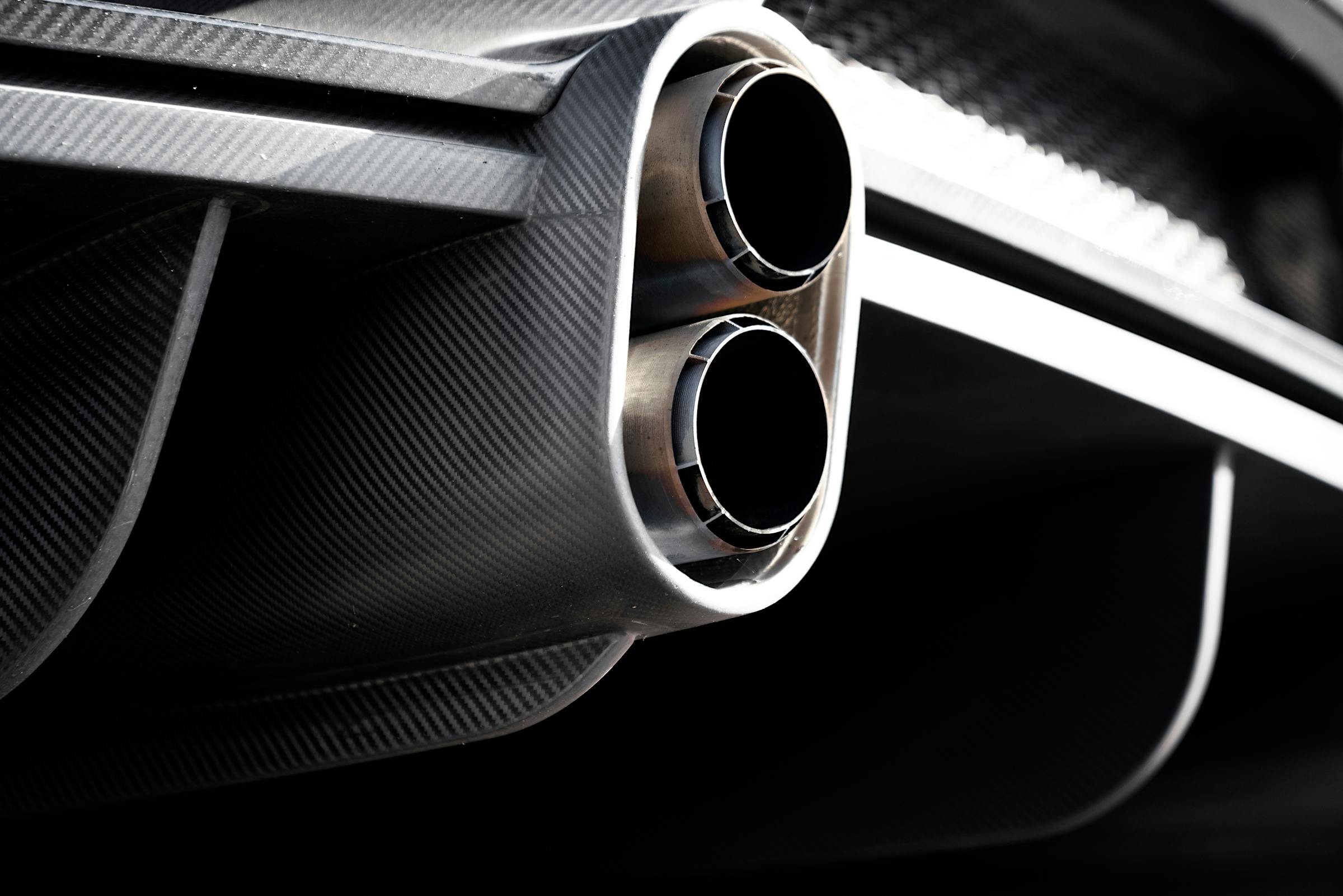
Four tailpipes framed in carbon — titanium and heat, the exit of 1,600 PS.
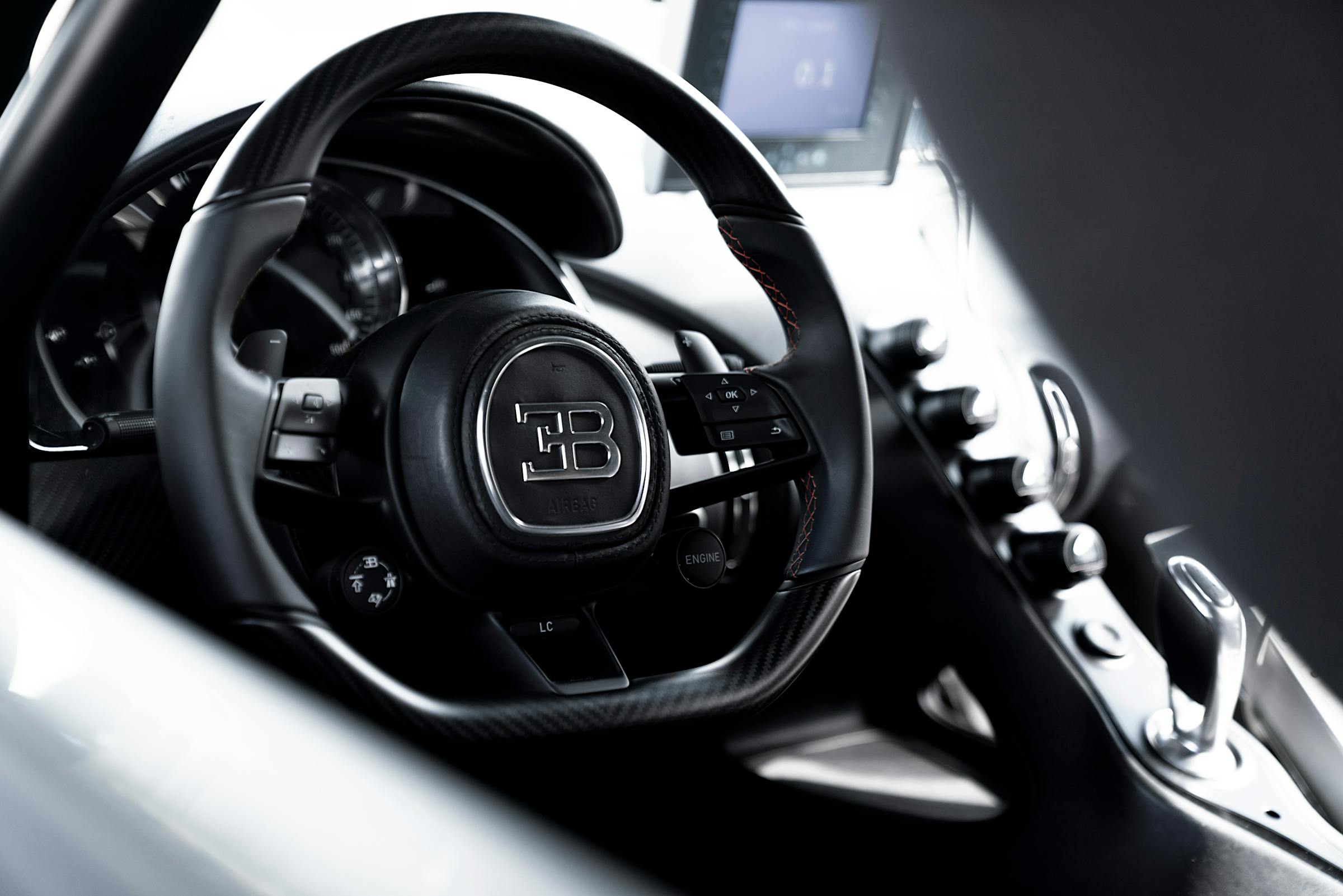
EB-badged wheel, paddles and ENGINE/LC buttons — everything for the drive.
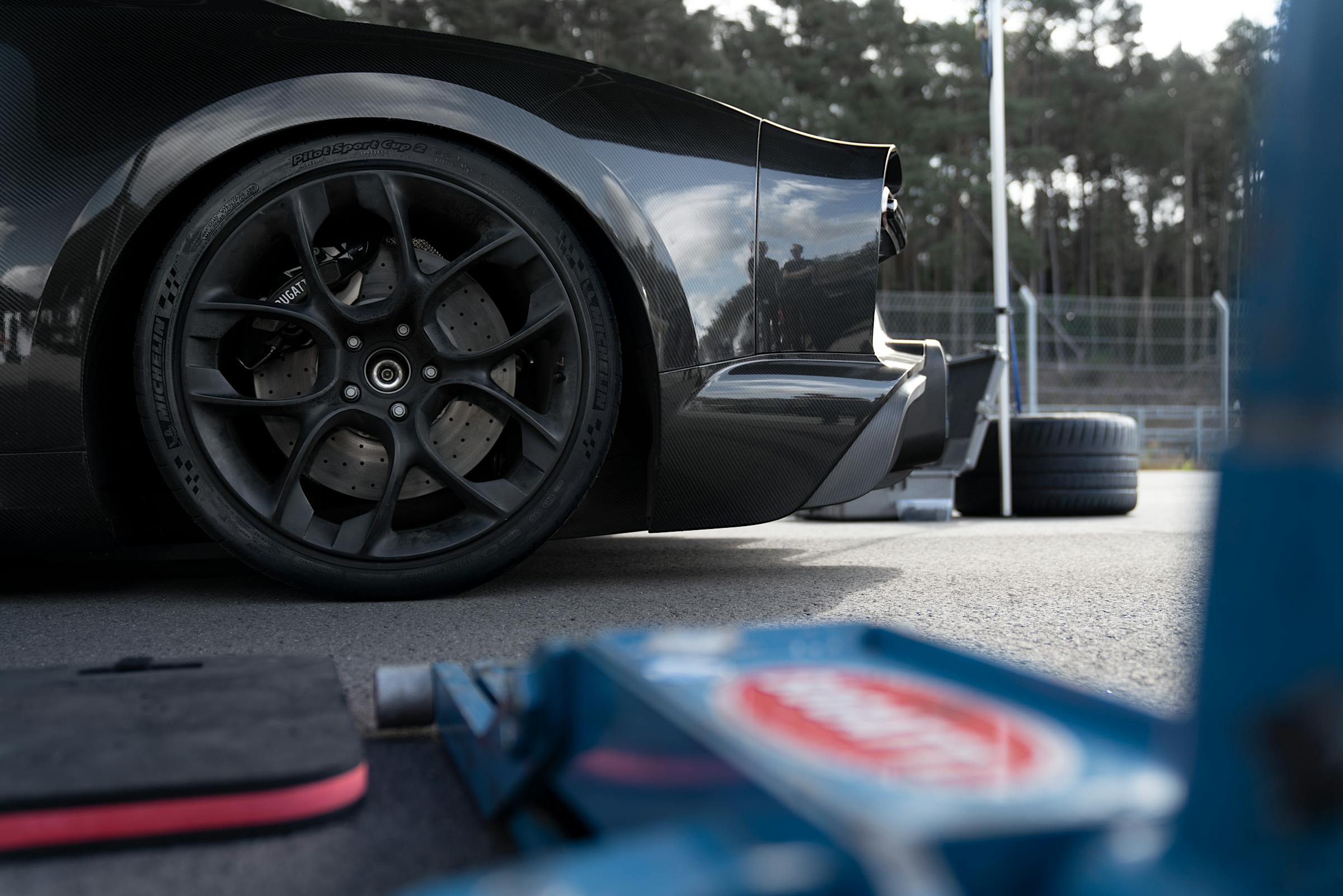
Michelin Pilot Sport Cup 2 and carbon-ceramic discs, uncompromising at 440 km/h.
On 2 August 2019, Bugatti became the first manufacturer to break the 300 mph barrier.
A near-production Chiron prototype became the first production-based car past 300 mph. A world record.
"We have become the first manufacturer to reach the magic 300-mile-per-hour mark — making ourselves, the entire team and myself, incredibly proud."
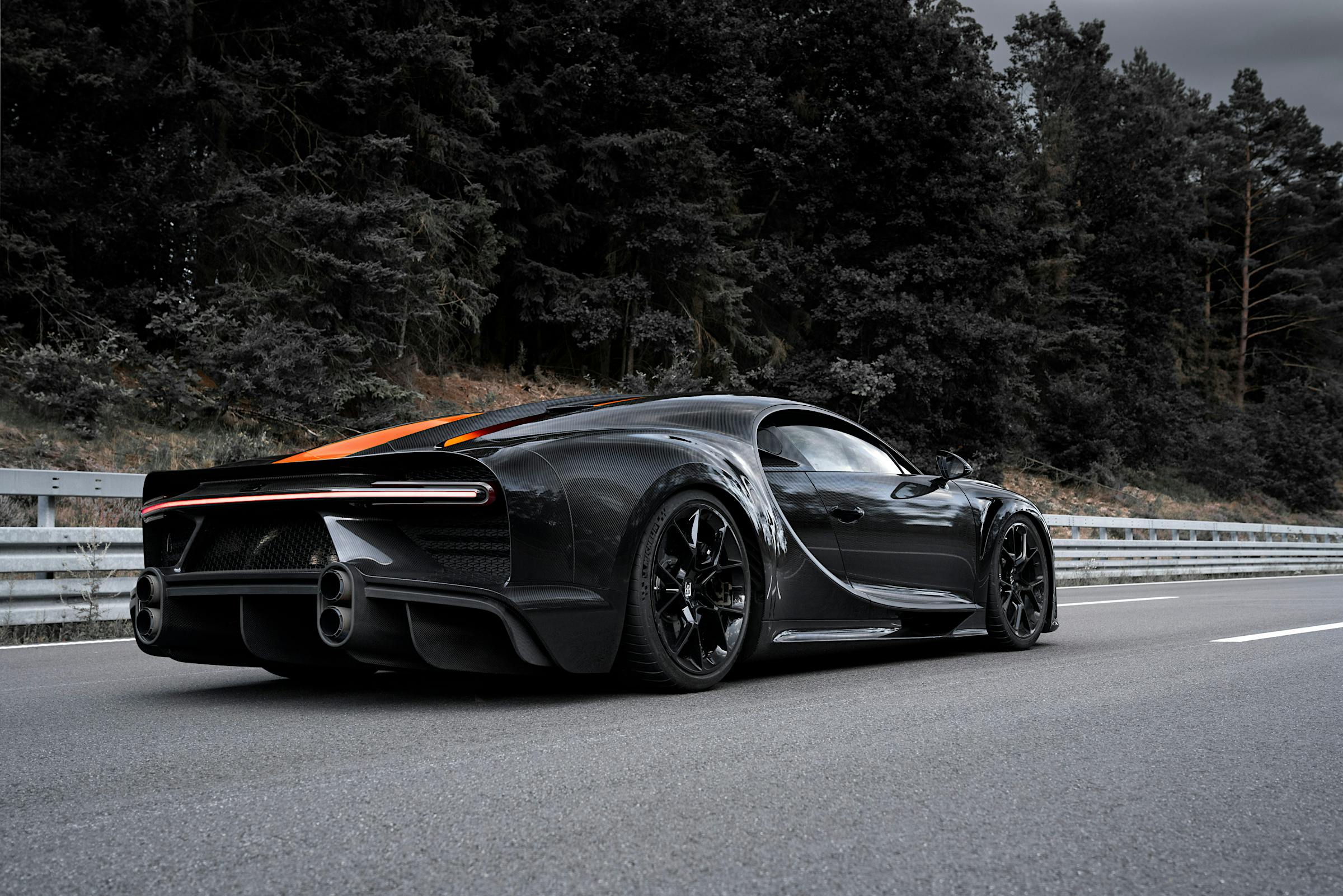
Andy Wallace worked his way up from 300 km/h in 50 km/h increments to confirm the aero balance. After one warm-up lap, he exited the north curve at 200 km/h, held full throttle for about 70 seconds on the 8.8-kilometre straight, then braked over two kilometres through the south bend — covering 136 metres every second.
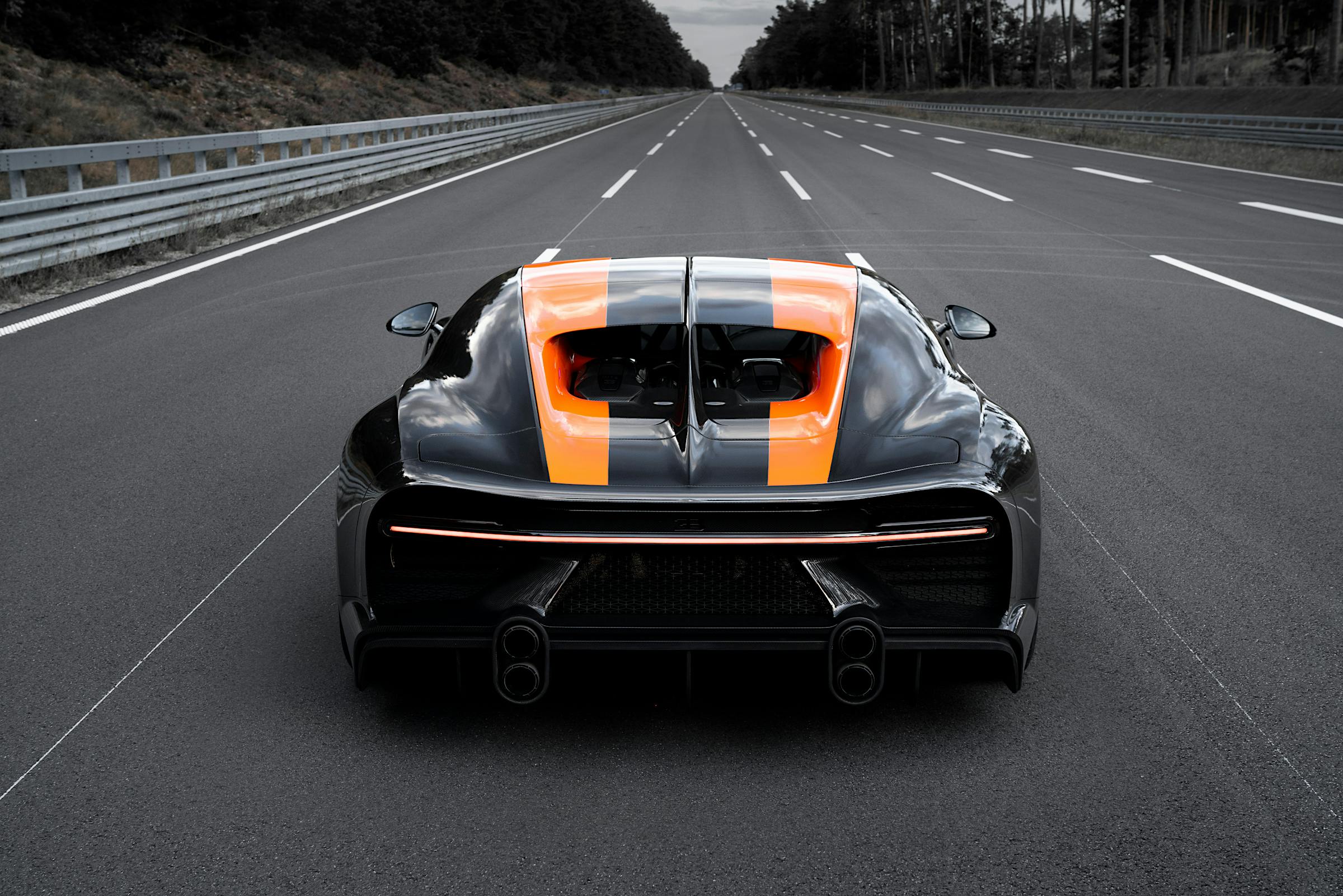
At just 50 metres above sea level, Ehra-Lessien's denser air is a handicap — above 400 km/h the car runs as if against a wall, and altitude can make up to 25 km/h of difference. Yet it is the only place in the world meeting Bugatti's safety standards: a 21-kilometre three-lane straight lined with crash barriers, rescue services at both ends, and the road cleaned with special mats before the run.
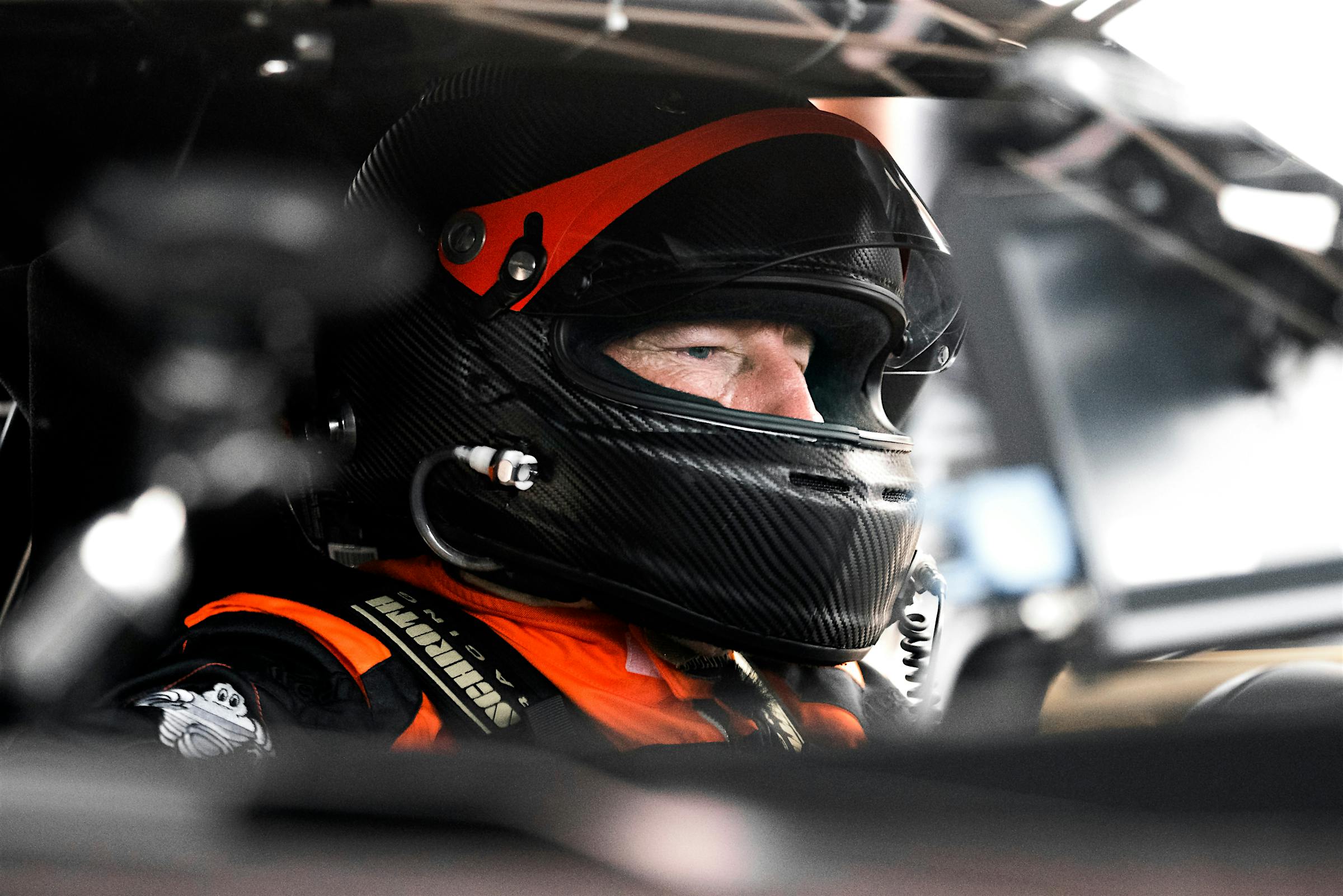
Andy Wallace straps on his helmet — Le Mans winner. In 1998 he set a 391 km/h record in a McLaren F1 on this same straight; today he is about to open a lap at 490 km/h.
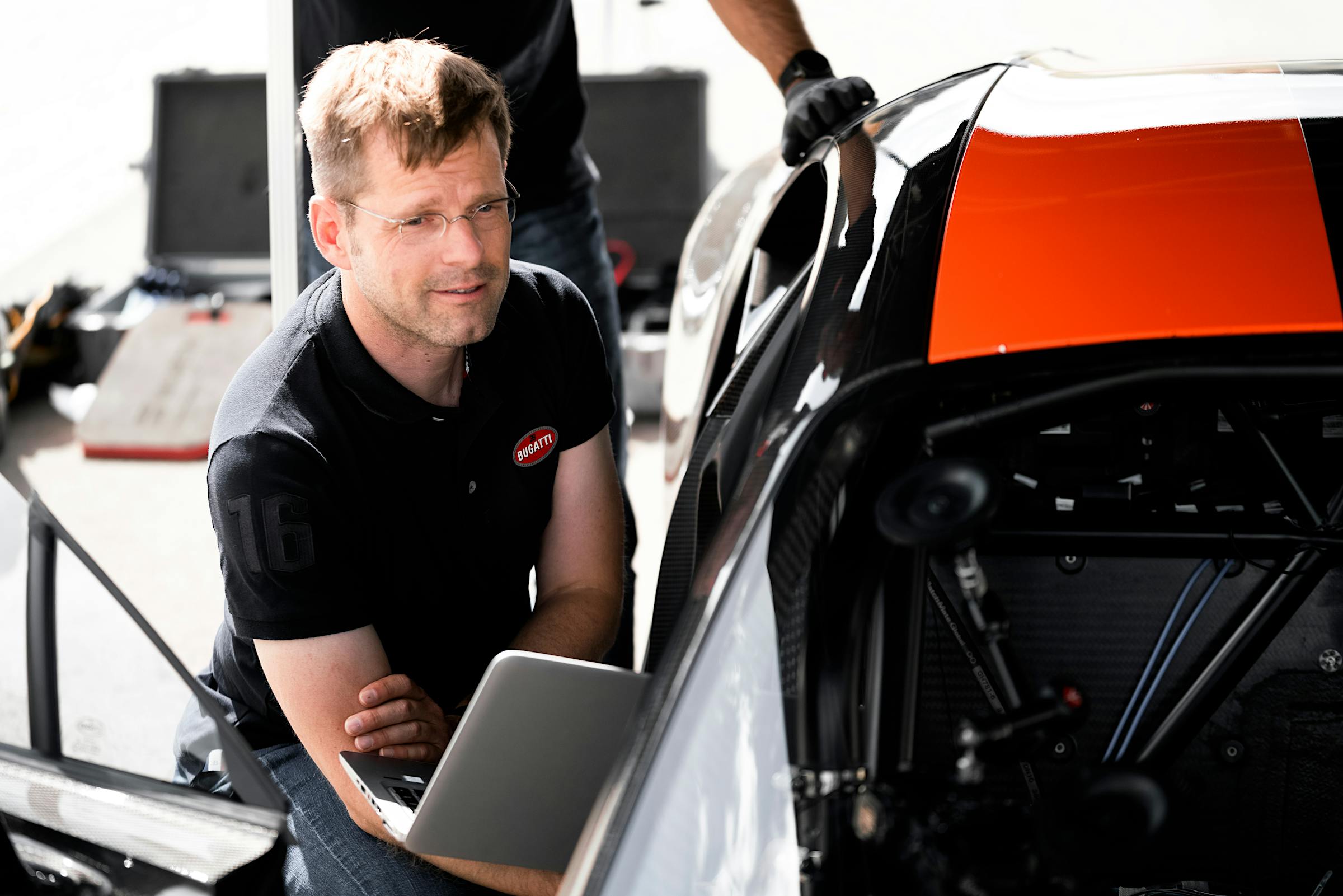
Engineers check telemetry line by line beside the engine bay — every increment confirmed before the run.
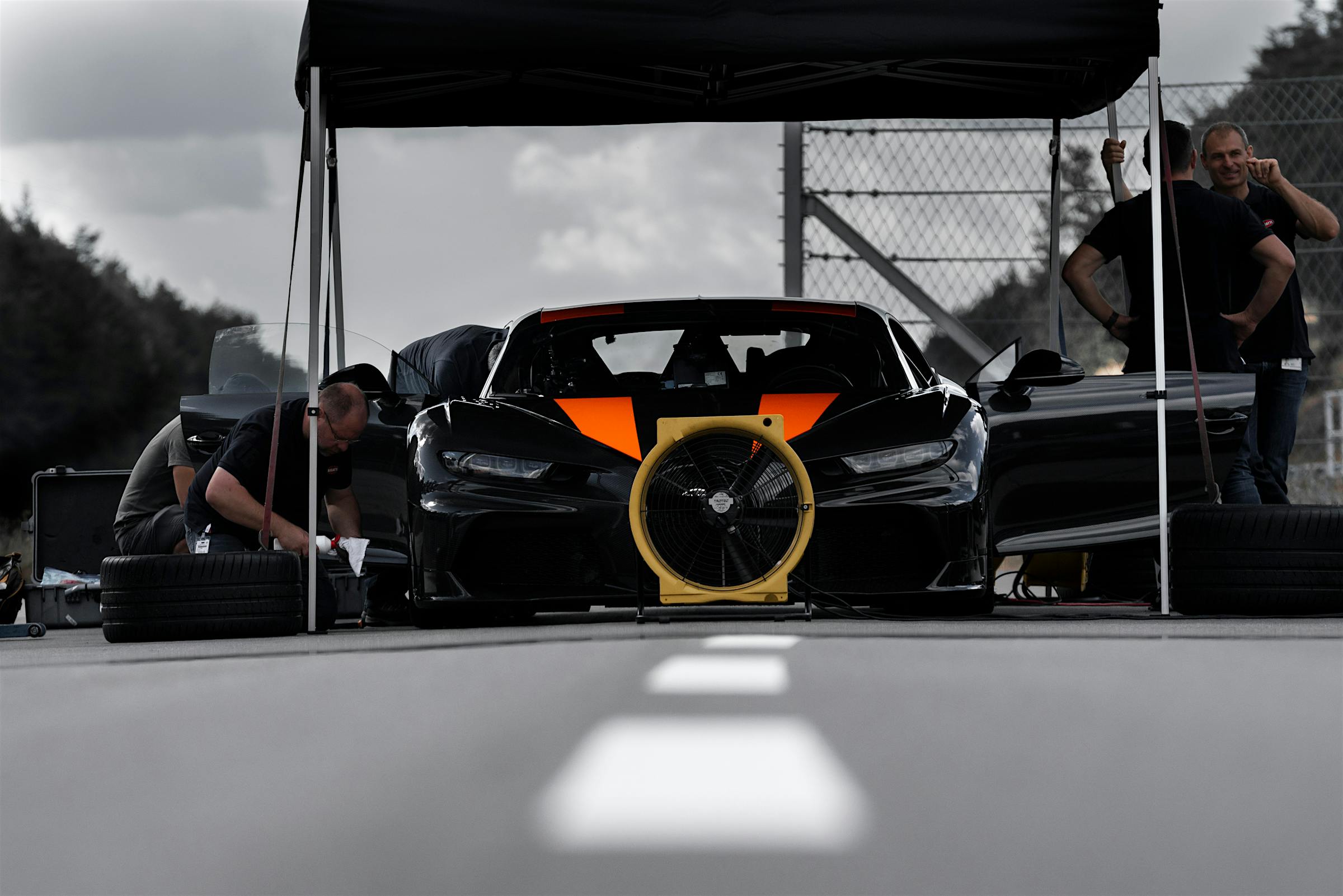
Cooling fans and spare tyres in place — every lap carries the whole team.

A sealed GPS box recorded the run, certified by SGS-TÜV Saar — 304.773 mph enters history.
PARTNERS
Italian race specialist Dallara and tyre partner Michelin were deeply involved — the record would not have been possible without them.
4,100 RPM
Reinforced Michelin high-speed tyres, revolving 4,100 times a minute, tested on the bench at up to 511 km/h in the USA, each one X-rayed.
SAFETY CELL
A cross-disciplinary team under Stefan Ellrott prepared the record car with six-point belts and an additional safety cell.
"Bugatti was the first to exceed the 300 mph mark — its name will go down in the history books and it will stay that way forever."
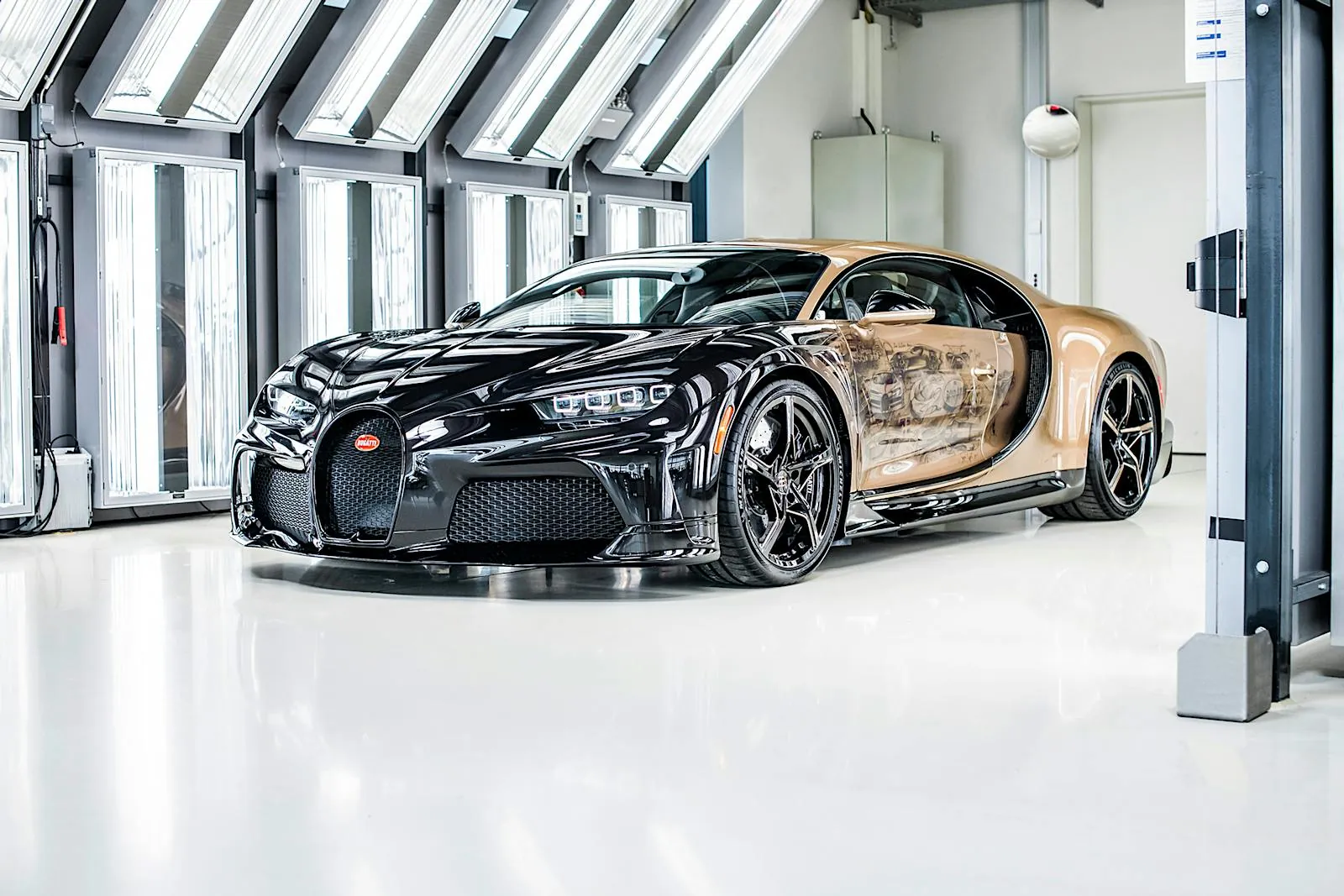
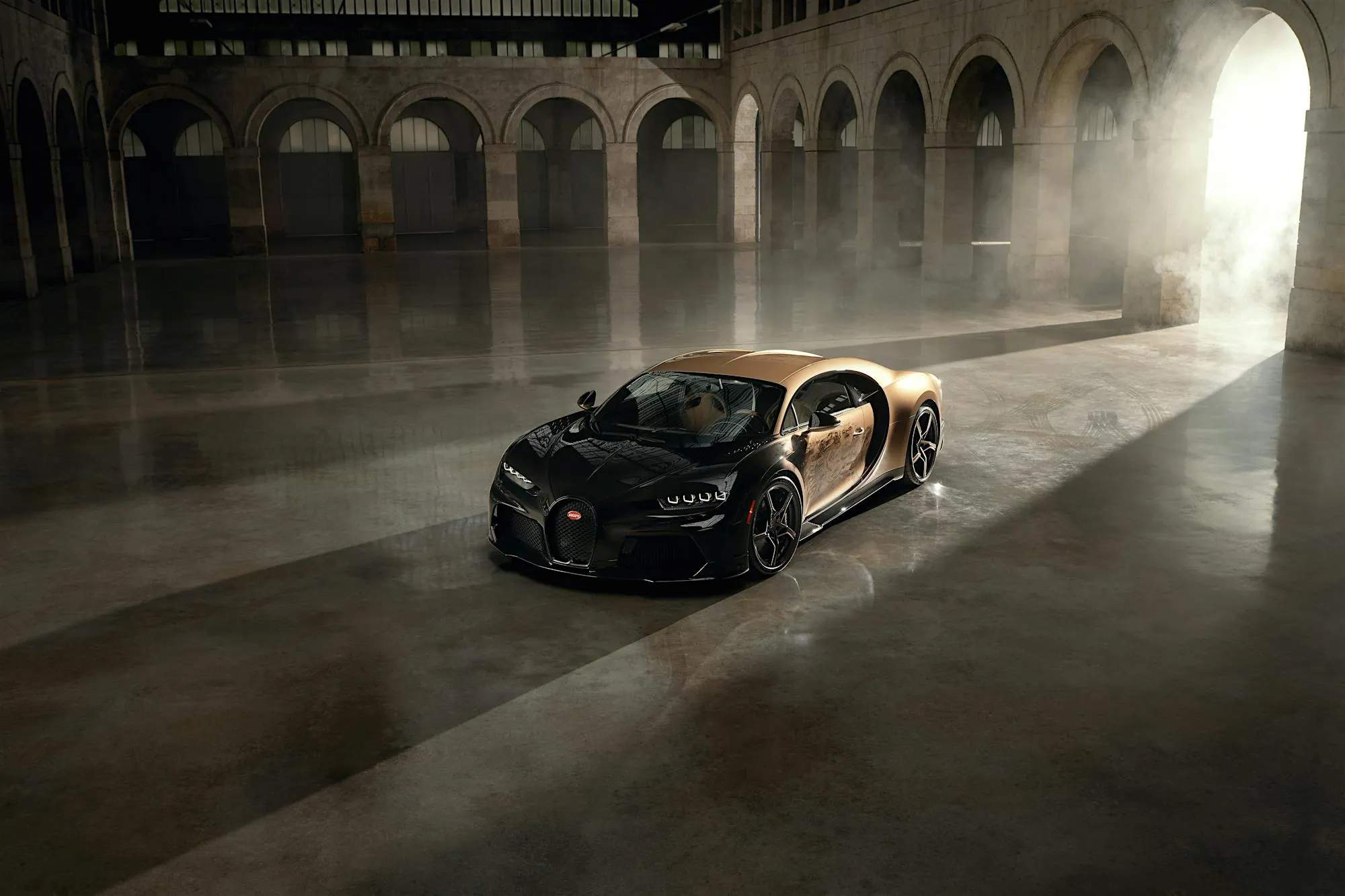
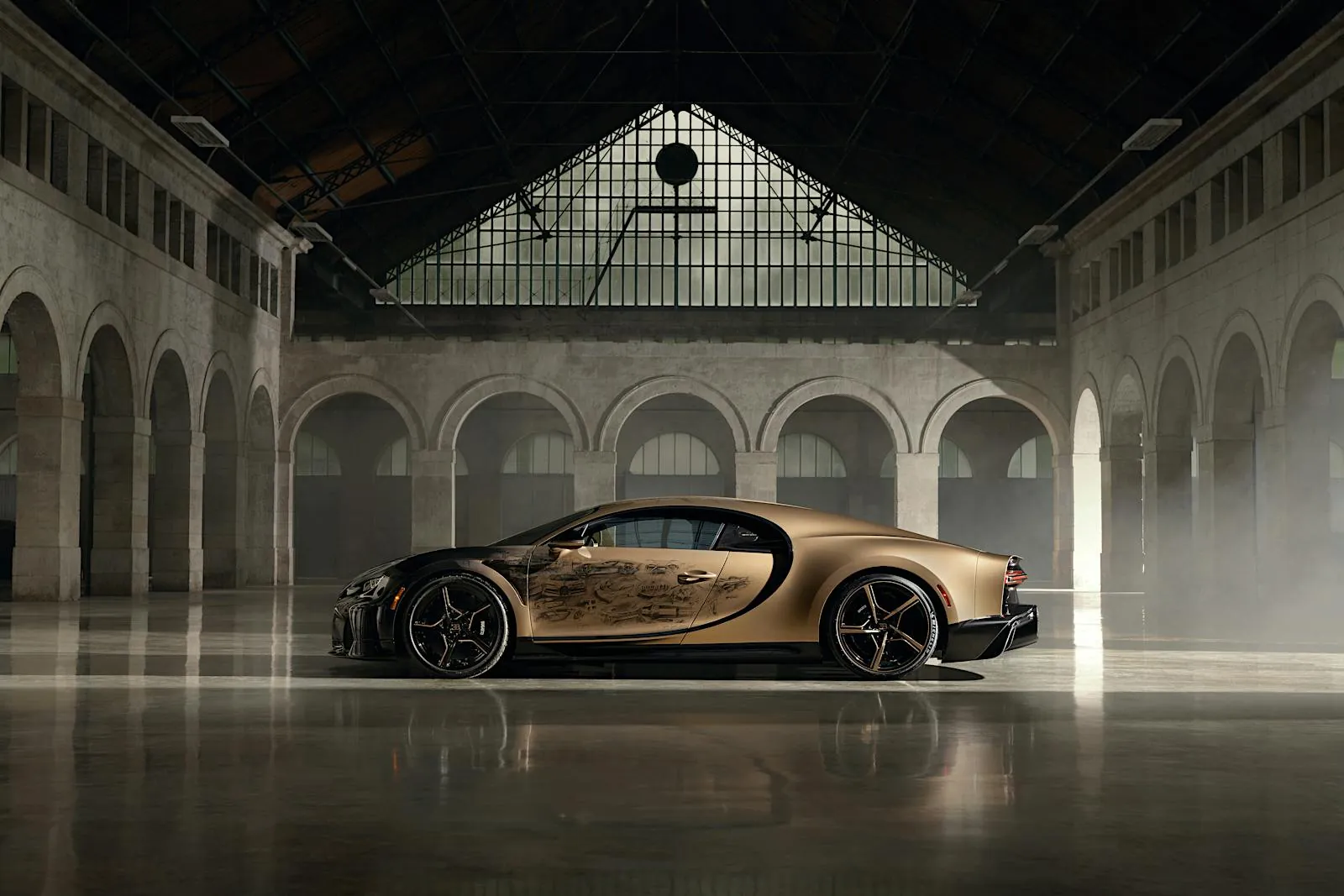
"What you see is what you get. If it looks like hand-drawn sketches, then it must be exactly that." — Every Chiron Super Sport can be unique.
Two artists, 45 hand-drawn sketches and a newly developed 'Doré' gold gradient — over two years, Bugatti's century of history was drawn, line by line, onto a Nocturne-black body.
45 hand-drawn sketches: 19 on the driver's side (1987 to today), 26 on the passenger side (1909–1956) — a newly developed 'Doré' gold gradient flowing over Nocturne black, two years in the making.
A tribute to chassis 50177, the 1931 Le Mans legend: lustrous black, a hand-painted '5' on both flanks, 'Le Mans 1931' script and the engine-turned 'Perlée' finish — even the underside of the rear wing carries a complete map of the 1931 Circuit de la Sarthe.
Jean Bugatti's groundbreaking duotone scheme, recreated in black and yellow: a black centreline over the nose, a fading '55' pattern across the fenders, and '55 1 of 1' in cursive under the wing — with Jean's signature on the sill and dedication plate.
The 500th and last Chiron. On its French Racing Blue fading to Atlantic Blue, the coordinates of every chapter of the Chiron era are written by hand.
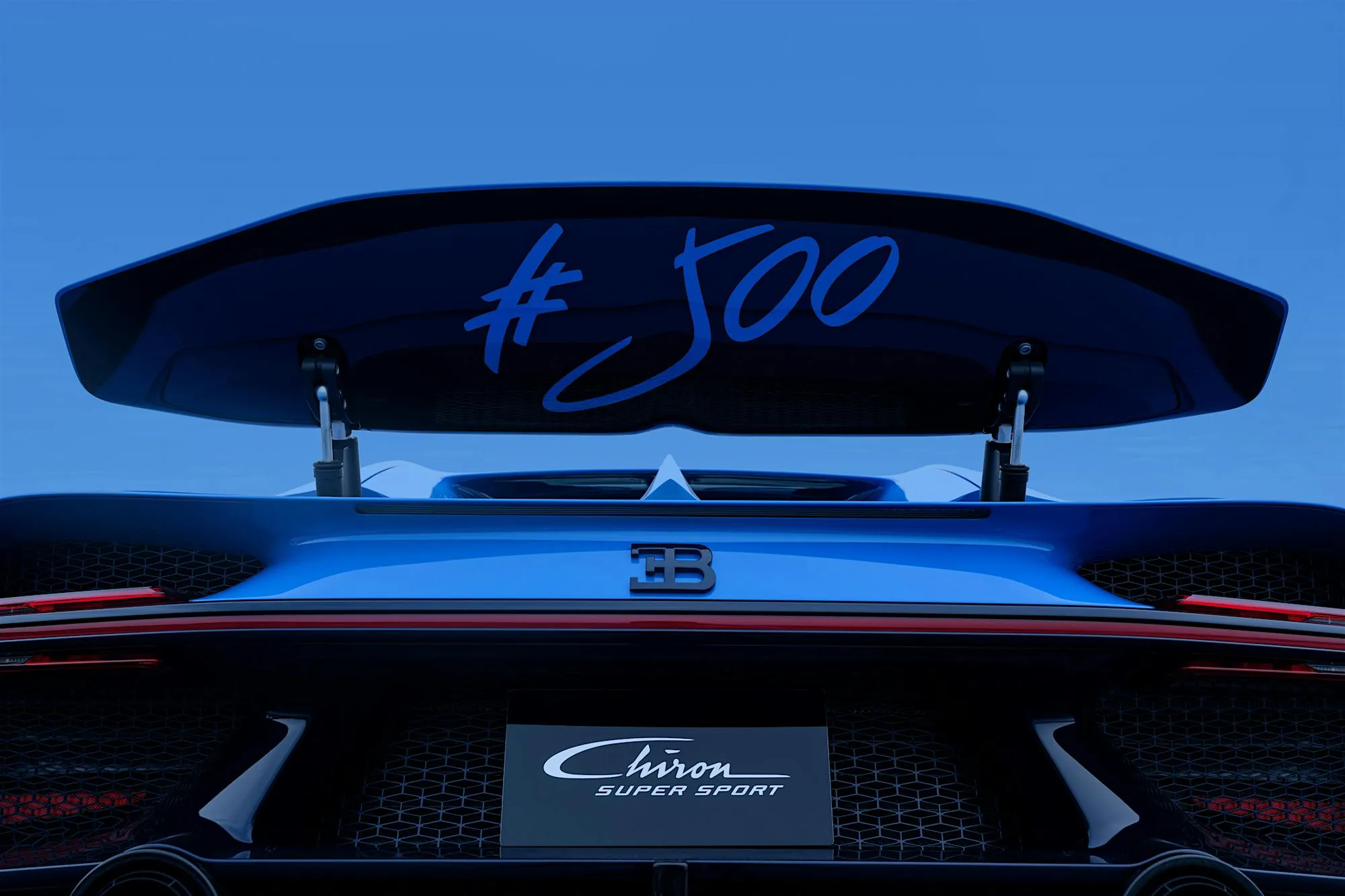

W16 · 8.0 L · Quad-turbo · All-wheel drive. Data from the official Bugatti technical specification.
Top SpeedTop Speed mode
Power Output@ 7,050–7,100 rpm
Max. Torque2,250–7,000 rpm
0–400 km/h4 seconds quicker than Chiron
Technical data from the official Bugatti "Chiron Super Sport" specification (2021). WLTP combined fuel consumption 21.47 L/100 km; combined CO₂ emissions 486.72 g/km; efficiency class G. Download official spec sheet (PDF) →